
On July 3rd 1975, Bob Dylan played a new song at an impromptu appearance in a small Greenwich Village folk club. The track could have been a highlight of Desire, the album he was about to start recording, but most Dylan fans wouldn’t hear Abandoned Love for another decade.
The recently separated Dylan spent much of his summer hanging out in the Village, catching up with old friends and plotting his upcoming travelling minstrel tour. The Other End became one of his favourite spots and it was there that he caught a set by Ramblin’ Jack Elliott.
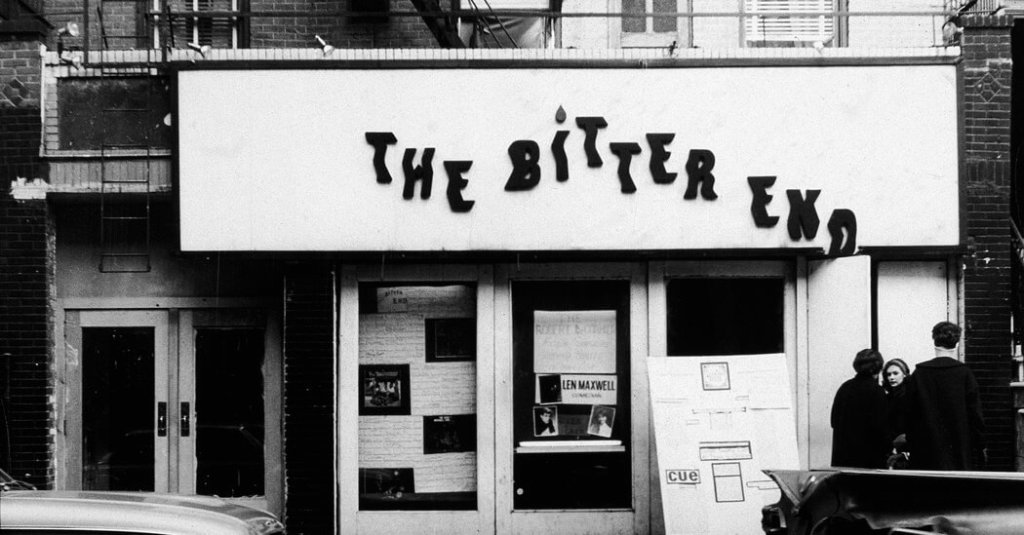
The two Village folk scene stalwarts would have better known the venue as The Bitter End, a Bleeker Street coffeehouse opened in 1961 by Fred Weintraub. When the latter moved to Hollywood to create the blacklist-enforcing folk music variety television show, Hootenanny, Paul Colby took over as the venue’s manager. Colby eventually bought the club in 1974, but Weintraub didn’t include the original name in the deal, hence The Other End.
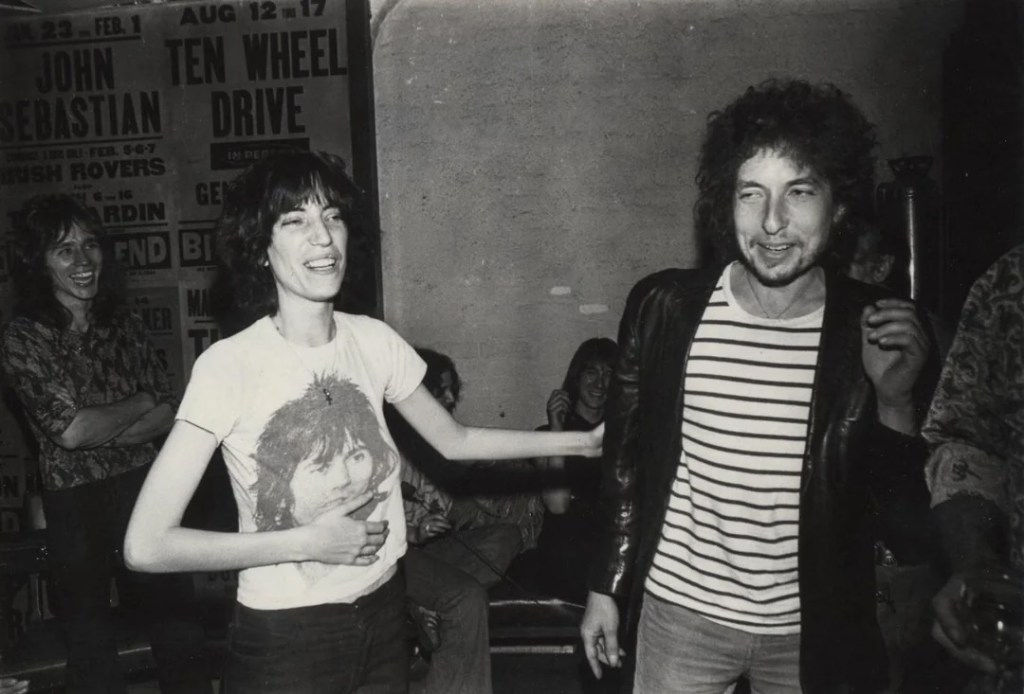
The enforced name change didn’t stop the venue from remaining a vital music hub. Dylan first saw Patti Smith perform at The Other End and was impressed by her somewhat familiar lyrical approach and how her band improvised around her stream-of-consciousness phrasing. A quest for more jazz-like spontaneity over standard rock jamming would characterise his upcoming studio and live activity.
Ramblin’ Jack represented a simpler, more nostalgic music and time, but Dylan enjoyed it enough to turn up again the following night. When Elliott played With God on Our Side, he urged its composer to join him onstage for a verse. Dylan surprised everyone present by agreeing but the pair immediately switched to a different song, Woody Guthrie’s Pretty Boy Floyd.
This was the first Guthrie song Dylan had ever learned to play, though at The Other End he leaves the vocals to the original Guthrie acolyte Elliot, who sings in a low register. Both men are playing guitar, though it’s hard to distinguish between their instruments on the audience recording, while the harmonica interludes are obviously Dylan’s. This is a decent, off-the-cuff rendition of a noble outlaw song that Dylan had previously reimagined on 1967’s John Wesley Harding and would do so again on the imminent Joey.
Next comes a curtailed version of How Long Blues, a magnificent blues song recorded in 1928 by Leroy Carr with his regular partner Scrapper Blackwell on guitar. Elliott sings the first couple of verses before attempting to hand the reins over to Dylan. According to an account of the evening by Joe Kivak, who may have been the person with the tape recorder, “Bob simply shook his head and mouthed something inaudible.”
Elliott eventually cuts How Long Blues short then offers the excuse that “we haven’t jammed in about seven years”. The audience doesn’t seem to mind, especially when it becomes apparent that Dylan is keen to take the spotlight and everyone soon realises that they’re bearing witness to the unveiling of a great new song. Having strummed along to the opening bars of Abandoned Love, Elliott also recognised what was happening and quietly stepped aside.
This left Dylan to build the drama with a long and intricate guitar intro before singing the first line, “I can hear the turning of the key”. That could suggest the narrator is the one doing the leaving referenced in the title, with the door being locked behind him suggesting there’s no way back. But then Dylan sings “I’ve been deceived by the clown inside of me” and it seems that he only thinks he’s the one in control. By the end of the first verse, the narrator is wearing “the ball and chain”, flipping the turnkey reference on its head.
As verse two concludes, we get to the crux of the matter: no matter who is leaving who, “my heart is telling me I love you still”. On the studio version that will eventually surface on the Biograph compilation in 1985, that line opens the song, colouring everything that comes after. Every dismissal, every “I’ve given up the game” or request to “cross me off your list” is undercut by this prologue.
The outtake of Abandoned Love is very much a Desire song: Scarlet Rivera’s violin sears and swoons, Howie Wyeth sets a steady pace on drums, while Rob Stoner’s bass walks alongside. But at The Other End, it sounds like something from the New York sessions for Blood on the Tracks – another spare and sober Up to Me.
With a working title of Sara Part II, Dylan’s soon-to-be ex-wife looms large over Abandoned Love, especially in the final verse. He pleads with her to “descend from the platform where you sit”, oblivious to who it was that placed the “radiant jewel” on her throne in the first place. At the conclusion of Desire’s Sara (the first part), Dylan sings that she gave him “a key to your door”. But now that it’s been locked on Abandoned Love, he knows he must leave, but needs one more shot of love before that happens. When he sings “won’t you let me see you smile before I cut you loose” at The Other End, Dylan drags out that last word, as if to delay his inevitable moment of departure.
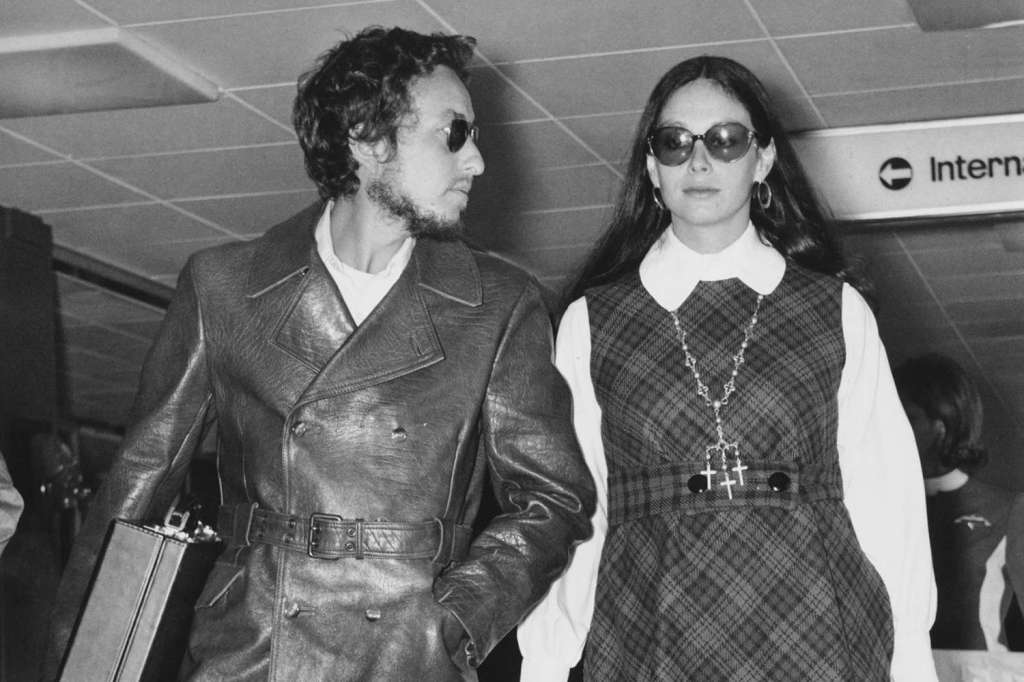
Back in the final verse, he urges the woman to “put on your heavy makeup, wear your shawl”, to be like the others who earlier in the song were all “wearing a disguise”. Crucially, that means the opposite to him. The singer is not hiding himself; he “cannot cover who I am”. Abandoned Love is Dylan exposing himself emotionally, something he did with unusual frequency during this highly charged time. This intimate performance in front of a small crowd filled with friends and fellow musicians at The Other End might be the most revealing of all.
When he recorded Abandoned Love during the fifth Desire session on July 31st, Dylan changed those final verse pleas to “take off your heavy makeup and your shawl”. Now he wants her to be as vulnerable as him when she lets him “feel your love one more time”, perhaps hoping she will change her mind.
In his excellent analysis of the song, Tony Atwood argues that Abandoned Love’s music and structure are too repetitive and unchanging, especially if it should represent the singer’s emotional upheaval. But perhaps any stasis reflects that time when a long-term relationship is obviously about to end, yet habit, inertia and apprehension postpone the inevitable, maintaining an unsatisfactory status quo just that little bit too long.
The suggestion in Atwood’s critique is that Dylan left Abandoned Love off Desire because he felt the song didn’t go anywhere or wasn’t fully formed. Yet, where the final verse anticipates the end of a relationship – “before I abandon it” – the song’s title uses the past tense, like an appellation afterthought for something he was now ready to move on from. Perhaps performing Abandoned Love at The Other End to such acclaim from his peers left Dylan feeling that he had expressed himself fully and could leave the song behind.
Of course, he did go on to tweak many of its lyrics before cutting the track twice in the studio, so it’s not like he fully abandoned the song. But Desire already had Sara, whose recording took up much more of his time during that final studio session. There was no real place for Sara Part II. On a record whose songwriting was largely a collaborative effort with playwright Jacques Levy, the gangsters and guns of the lamentable Joey may have felt more apt than leaving more blood on the tracks.

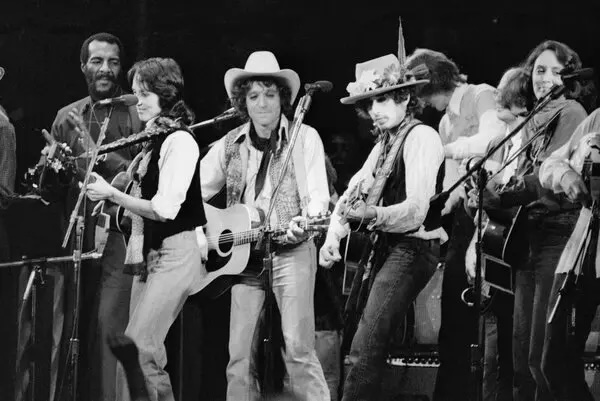
When Abandoned Love did come to light on Biograph, it was a highlight of that collection; a standalone surprise that may even make it a more special part of Dylan’s back catalogue than had it been a Desire album track. Its composer had long discarded the song, not even including it on the sprawling setlists of the Rolling Thunder Revue tour that followed just a few months later.
Those shows were collective affairs with theatrical stagings where Dylan regularly took to the stage plastered in heavy white makeup. The revealing, solo rendition of Abandoned Love on a bare stage at The Other End was a one-time-only performance. And while it has yet to receive an official release, the bootleg recording remains an extraordinary record of the raw power of Bob Dylan, alone and unmasked, unafraid to admit that “my heart is telling me, I love you still”.


Leave a Reply