
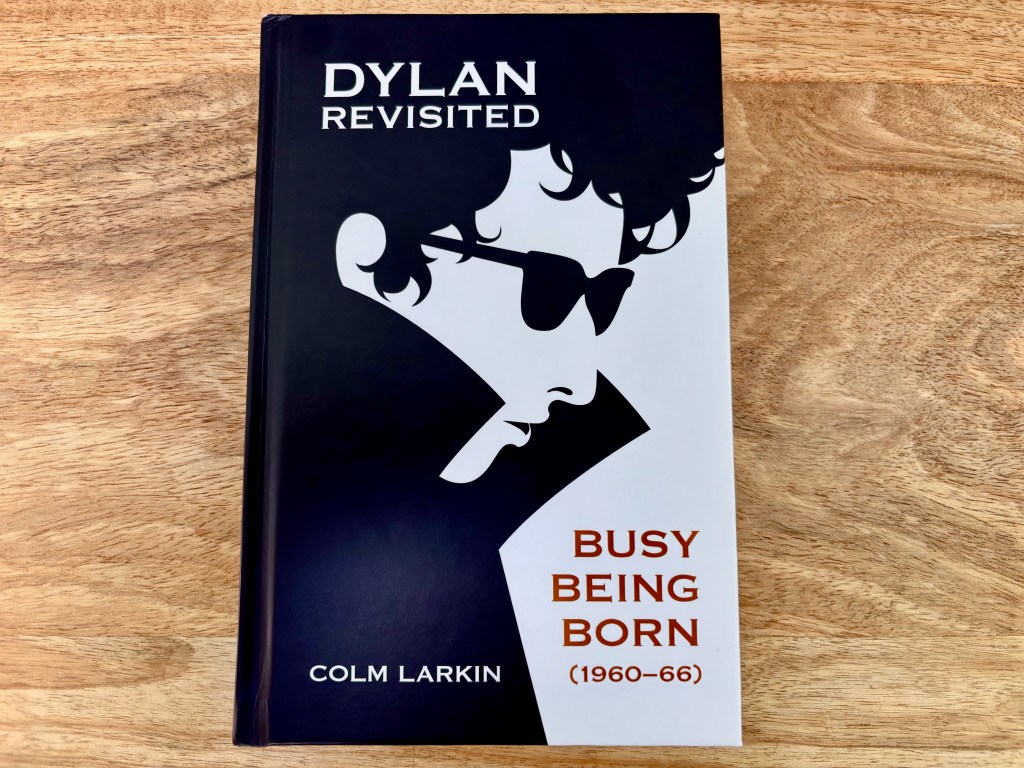
The following is an extract from the new Dylan Revisited book, Busy Being Born (1960-66). This history of Newport Festival of Folk and the story of Dylan’s first appearance at the 1963 edition is taken from a chapter on The Other Side of the Mirror, which also covers his subsequent appearances over the next two years, including that infamous electric set in 1965.
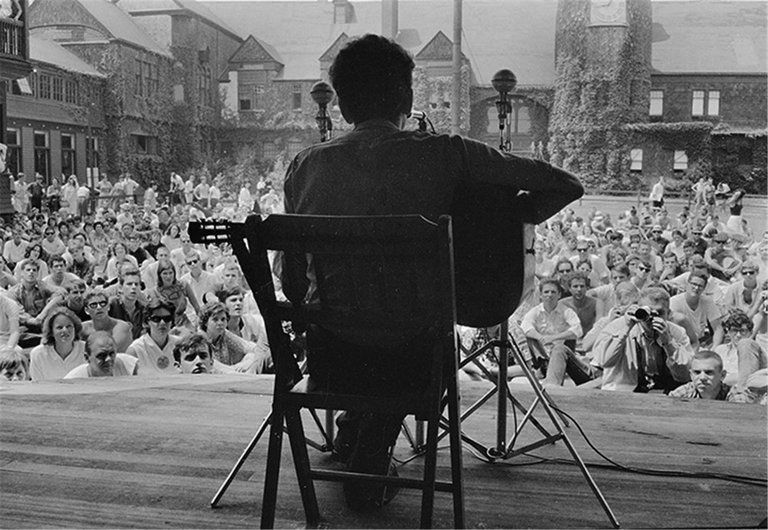
The story of Bob Dylan at Newport Festival, as told by Murray Lerner’s documentary The Other Side of the Mirror, is also the story of the rise and fall of the folk music revival. In three years of appearances at the festival from 1963-65, Dylan represented the scene’s transformation from alternative emblem to commercial success, before he finally revealed its obsolescence in the face of rock music with one of the most incendiary live performances in music history.
It’s a story you’ve probably heard before but it’s always worth hearing. Because it’s so dense with characters, perspectives, memories and opinions, each version you encounter is an opportunity to discover something new.
The Newport Festival of Folk began life as an offshoot of the Newport Jazz Festival. The latter was first held in a casino at the Rhode Island seaside town in 1954 and featured Billie Holiday, Ella Fitzgerald, Eddie Condon, Dizzy Gillespie and Oscar Peterson. It was organised by George Wein, a jazz musician and promoter who ran a nightclub in Boston and a record label, both called Storyville.
Heiress, socialite and Rhode Island resident Elaine Lorillard was a huge jazz fan and when she met Wein at his club, she proposed that he organise a festival in her hometown. Working closely with a pair of executives from Columbia Records – George Avakian and future Dylan producer John Hammond – and with $20,000 funding from Lorillard, Wein’s event attracted at least 11,000 people over its two days and earned widespread positive reviews.
Despite some local opposition to plans for extending the festival site to Lorillard’s newly purchased estate, Belcourt, Newport Jazz Festival continued to grow over the following years. The 1958 edition was filmed by Avakian’s younger brother, Aram.
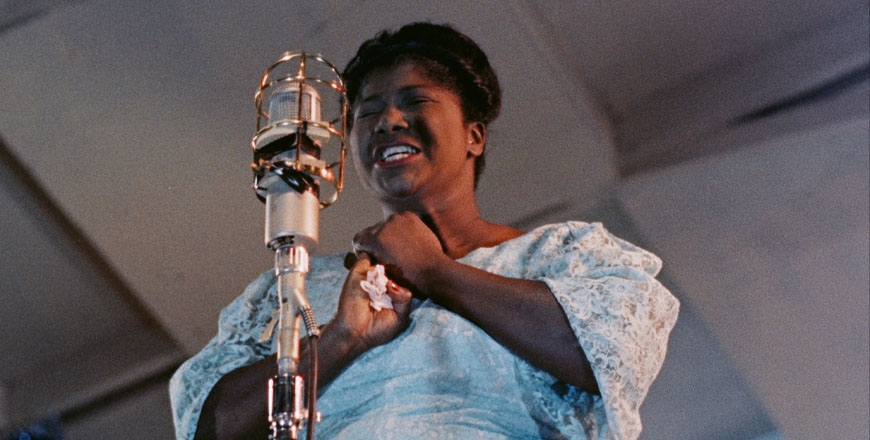
Released the following year, Jazz on a Summer’s Day is often said to be the first feature-length documentary about a music festival and showcases performances by Thelonius Monk, Dinah Washington, Louis Armstrong, Mahalia Jackson and Chuck Berry. The latter rock’n’roller was a relatively controversial addition to the Newport Jazz line-up – a portend of sorts for what would happen at its sister festival a few years later.
For the 1959 Newport Jazz Festival, Wein began planning an afternoon showcase of folk music featuring artists like Pete Seeger, The Kingston Trio and Odetta. But amid pressure from the jazz community, some of whom regarded the folk revival as too commercial, Wein decided that folk music was big enough to warrant its own festival.
He had met Albert Grossman when booking his client Odetta to play Storyville and asked him to help with organising this new event. Grossman, in turn, called on Seeger, Theodore Bikel, Oscar Brand and Harold Levanthal, who are now all credited as co-founders of the Newport Festival of Folk.
The first edition ran over two days from July 11-12th 1959, a week after the Jazz Festival, with both events taking place at Freebody Park in the heart of Newport. The line-up included Seeger, Ireland’s Tommy Makem, Austrian-born folk and cabaret singer Martha Schlamme, the Piedmont blues of Sonny Terry and Brownie McGhee, along with dozens of banjo pickers, blues shouters, gospel singers and, what writer Studs Terkel described as “city billies”, which presumably meant clean-cut collegiate groups like The Kingston Trio.
A widely regarded highlight was the guest appearance alongside Bob Gibson of the 18-year-old Joan Baez, which we covered in more detail in the chapter on the Philharmonic Hall concert. Though, as Elijah Wald notes in his essential book, Dylan Goes Electric!, the chart-topping Kingston Trio were the real crowd favourites of the first Newport Folk Festival, much to the dismay of the revival’s more puritan members. In another foreshadowing of Dylan’s future impact, the group’s set was so popular that the act following them, bluegrass banjo innovator Earl Scruggs, was unable to begin his performance due to what the Newport Daily News called “an unquenchable burst of protest”.
The success of the 1959 Newport Festival of Folk led to an expanded three-day event in June of the following year. Though it was ultimately overshadowed by events at the subsequent Jazz Festival, whose July 4th weekend was curtailed by street fighting and tear gas-stained riots.
The unrest was started by ticketless fans who clashed with the police preventing their access to the sold-out festival site. This instability was matched by divisions within the festival organisers. Elaine Lorillard was divorcing her husband, which cost her a place on the festival management team.
Meanwhile, music critic Nat Hentoff (who would go on to write the liner notes for Dylan’s second album, The Freewheelin’) and hard bop bassist Charlie Mingus were critical of the festival’s focus on the more mainstream side of jazz and so, with support from Lorillard, launched a rival festival at the nearby Cliff Walk Manor on the same weekend.
By the end of the weekend, the town had no festivals after its council responded to the Saturday night disturbances by revoking Newport Jazz’s license. The following day’s schedule was cancelled except for an afternoon blues workshop with Muddy Waters, John Lee Hooker and poet Langston Hughes. It took a two-year hiatus before the Newport Jazz Festival returned. The folk version had to wait until 1963, by which time it had a fresh ethos.
When Wein revived the Newport Festival of Folk, he decided not to partner again with Grossman. As the creator and manager of Peter Paul and Mary, Grossman was seen by many in the folk revival as overly commercial and Wein had learned from his experience with the Jazz Festival that it was useful to keep the most respected members of the scene on his side. So this time, he went straight to Pete Seeger, who had just returned to the US from a world tour, a trip largely prompted by being blacklisted at home.
In 1960, Seeger had waived his Newport appearance fee if the festival agreed to include an obscure Canadian fiddler on that year’s bill and pay for his travel. Whilst away, Pete and his wife Toshi had discussed the idea of a more egalitarian event where every artist was paid the same, housed together and the emphasis was on a diverse range of styles and backgrounds.
When Wein asked him to organise the 1963 Newport Festival of Folk, Seeger suggested this new approach. He also helped to ensure that the event was much more political than before, with the growing civil rights movement represented by The Freedom Singers (see the previous chapter on Broadside Ballads).
But Grossman would still have his say on some aspects of the festival. While Peter Paul and Mary couldn’t demand a large fee in the new setup, the band was still a big draw and their manager used their appearance as a bargaining chip.
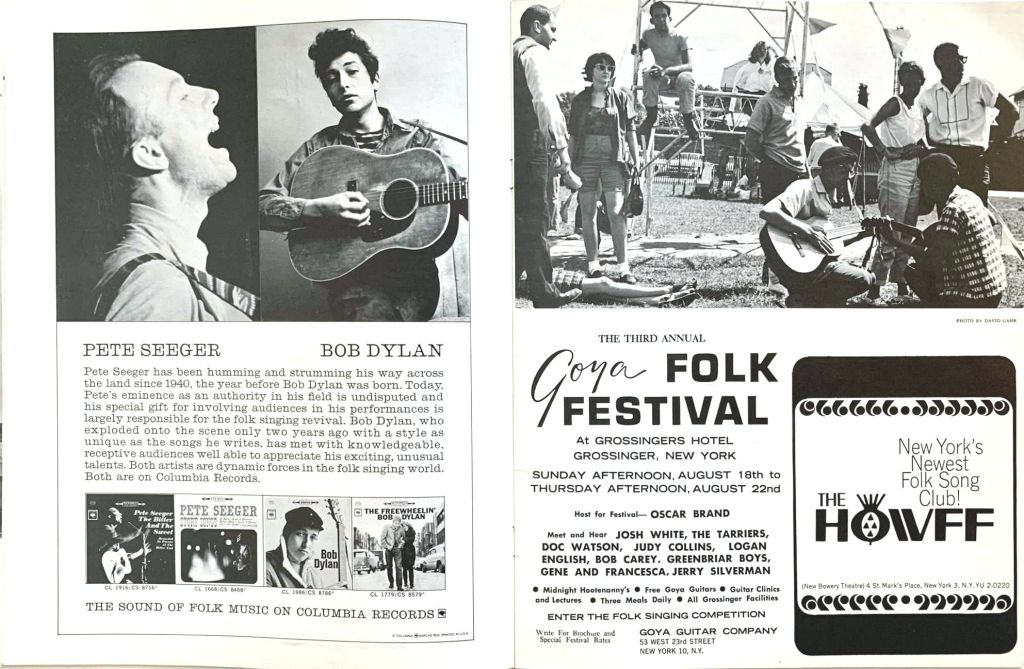
In this case, he gambled on promoting another of his acts: insisting that Bob Dylan be given the Friday night headline slot and a prominent feature in the festival programme. Dylan’s ubiquity over the weekend was furthered by afternoon workshop sets and guest appearances with Baez.
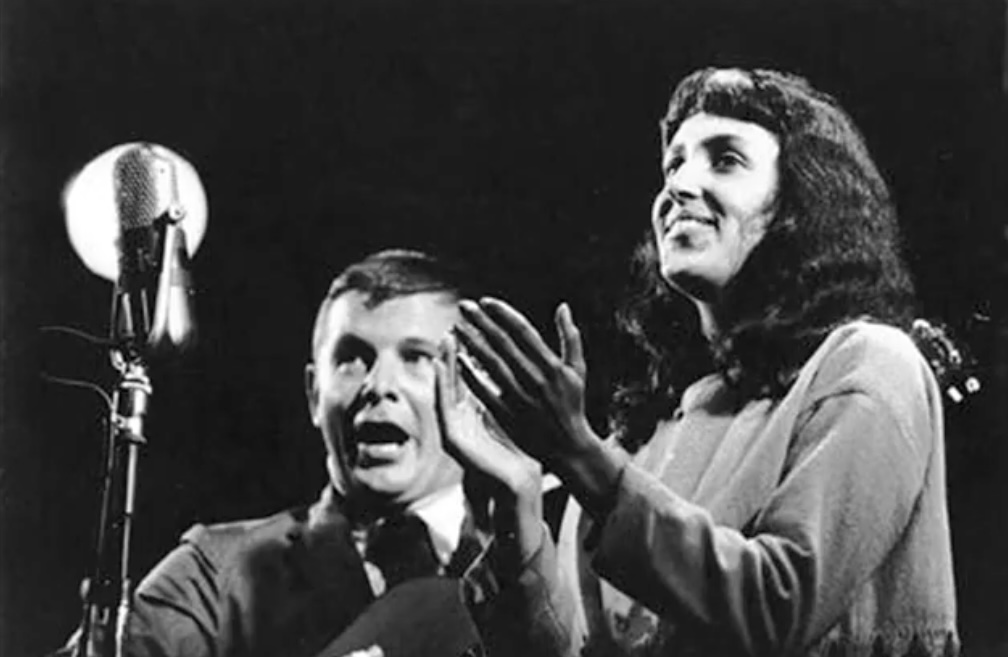
The Other Side of the Mirror begins its 1963 section at one of these daytime sessions with folk singer Jim Garland handing Dylan a guitar pick just before the younger man introduces his song “about an iron ore town.” Garland had grown up in a coal mining area of East Kentucky, going down the pits himself and even getting involved in the union-led strikes that turned violent, known as the Harlan County War. The former miner looks enthralled and impressed by Dylan’s depiction of a declining mining town on North Country Blues.
Though the filmmaker is more interested in the response of another singer, Judy Collins, who watches Dylan with intensity – a notable contrast to her less-than-impressed response when she first saw him perform a few years earlier (see the earlier chapter on Indian Neck Folk Festival).
Newport’s workshop sets were informal affairs with the performers sitting on a small stage, surrounded by their fellow musicians. When Dylan is joined by Joan Baez, the Appalachian singer Jean Ritchie brings out extra chairs, while her fellow mountain musician Doc Watson and another banjo player, Clarence Ashley, sit listening.
Dylan starts by referencing an earlier performance of The Patriot Game by Jean Redpath, noting that he had originally heard the Dominic composition from Liam Clancy and then used the tune for his song, With God on Our Side.
“It’s a ballad of sorts,” he continues, “it tells a story…if you like stories.” He then spends a minute or so trying to tune his guitar while Baez looks on in bemusement, before Dylan laughs and quips, “Maybe it doesn’t tell a story.” This shambolic yet sincere style will have been familiar to anyone who saw him perform in Greenwich Village and is matched by an earnest outfit of plain shirt and trousers that make him look every inch a working man.
Once he begins With God on Our Side, Baez joins in right away. Their duet feels quite competitive with both trying to sing louder than the other, while Dylan’s guitar strumming is rudimentary and still slightly out of tune. The workshop footage of this performance is incomplete, so The Other Side of Mirror cuts to the pair singing the same song at the previous evening’s headline set, with Baez looking angelic in a white dress, while Dylan seems to be wearing the same clothes.
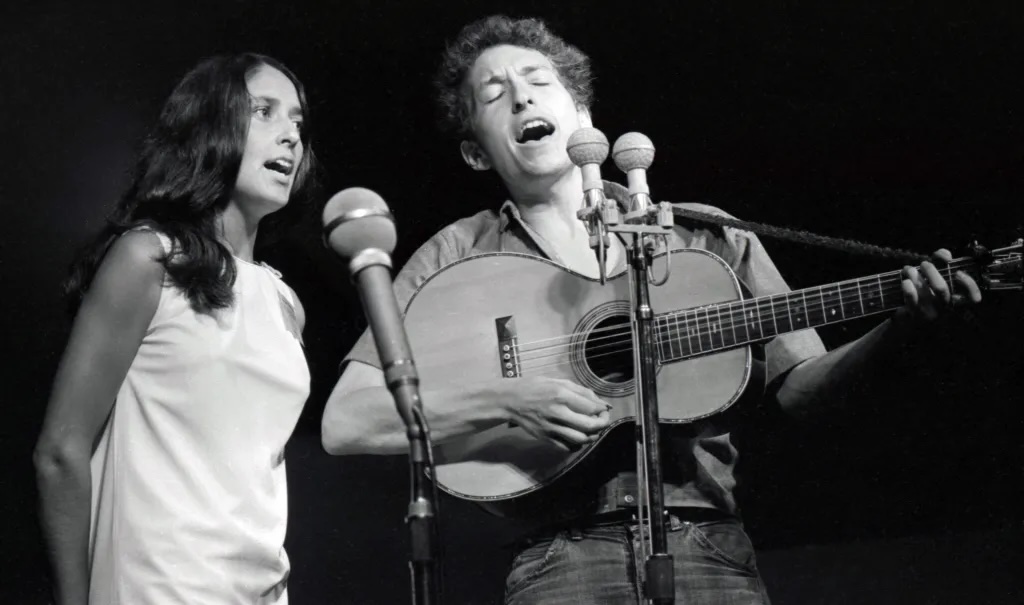
That evening set had begun with the first of earnestly over-the-top introductions Dylan would receive at Newport, when Peter Yarrow proclaimed, “He has his finger on the pulse of our generation.”
During the performance of Talkin’ World War III Blues that follows, Dylan frequently raises the neck of his guitar over his shoulder in a manner that would have reminded many of the festival audience of the previous generation’s pulse taker, Woody Guthrie. Yarrow had earlier cited Guthrie as a comparable songwriter to Dylan before Peter Paul and Mary sang Blowin’ in the Wind.
Later in the set, Dylan plays Only a Pawn in Their Game, a song he first performed earlier that month on a farm in Greenwood, Mississippi, as part of a voter registration rally. If that feels like a very Guthrie setting, Dylan’s rendition of the same song on July 19th at the La Copa Supper Club in Puerto Rico for an audience of Columbia Records sales executives calls to mind the episode at the end of Guthrie’s memoir Bound for Glory where he auditions at the high-end Rainbow Room on the 65th floor of the Rockefeller building.
Like Guthrie, Dylan felt uncomfortable in that more monied environment and skipped a dinner with one of the label’s bigwigs because he was required to wear a tie. The feeling was somewhat mutual as some of Columbia’s southern state reps worried how a song like Only a Pawn would be received in their market.
At Newport, Dylan is preaching to the choir with his stern and sterling song calling out the puppet masters behind the man who fired the bullet that killed civil rights activist Medger Evers. The festival crowd presumably also lapped up Talkin’ John Birch Paranoid Blues and A Hard Rain’s a-Gonna Fall, though we don’t have a recording of these performances.
Friday evening at Newport ended with an ensemble finale as Dylan led The Freedom Singers, Joan Baez, Peter Paul and Mary, Pete Seeger and Theodore Bikel in a bawdy version of Blowin’ in the Wind. It’s obviously under-rehearsed as the various singers largely struggle to find their role in the harmonies and only Baez’s resonant warble stands out behind Dylan. When The Freedom Singers take over for the closing rendition of We Shall Overcome, everything immediately sounds more coherent.
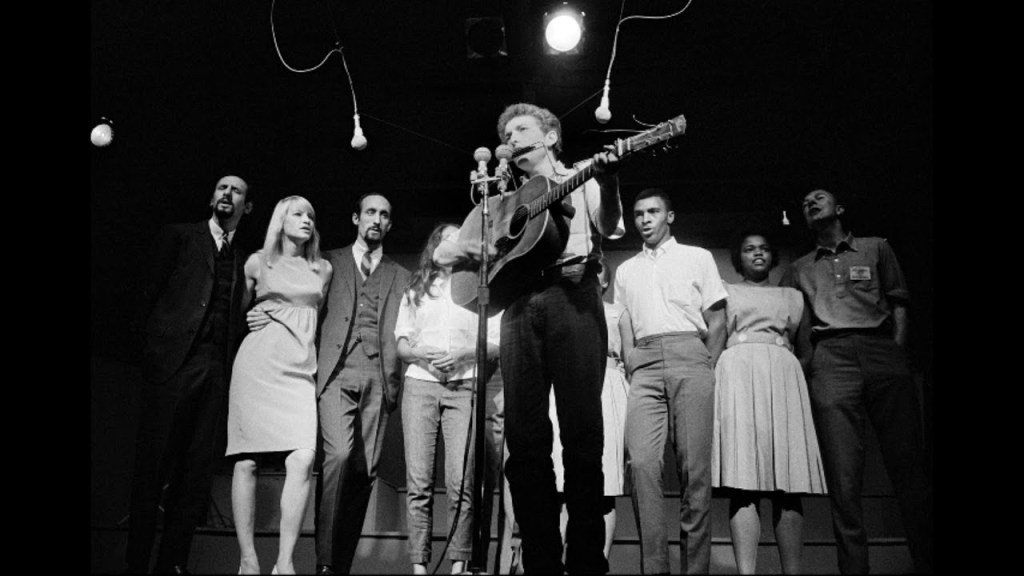
On Sunday, Dylan took part in a Topical Songs and New Songwriters workshop, hosted by Seeger, where he sang Who Killed Davey Moore?, Masters of War and Playboys and Playgirls. The latter was a Dylan original that feels like it was written specifically for the occasion, though he had first recorded the song as a demo for Broadside in November 1962. Seeger urges the crowd to sing along, “even if you’ve never heard it before because only one line changes”.
That variation is the litany of unsavoury characters who “ain’t gonna run my world” from “fallout shelter sellers” to “red baiters and race haters”. Simple, repetitive, communal and direct, Playboys and Playgirls is pure Seeger and emblematic of the unity between audience and artists at that year’s Newport festival. But this is the only time Dylan will ever perform the song in public.
As The Other Side of the Mirror concludes its 1963 section with the lights going out on the evening stage, a voice announces that “there will be singing through the night in the town of Newport”. Indeed, the end of the scheduled entertainment was only the cue for the crowd to bring out their own guitars and other instruments.
For Seeger and his fellow believers, this was the point of folk music: it was for and by the people. But by Newport ’64, the new star of the scene was beginning to distance himself from that ideal…
Continue the dramatic story of Bob Dylan at Newport Folk Festival, featuring Johnny Cash, electric guitars, booing crowds and a broader look at what makes the festival so special, by ordering your copy of Dylan Revisited: Busy Being Born (1960-66) today.


Leave a comment