
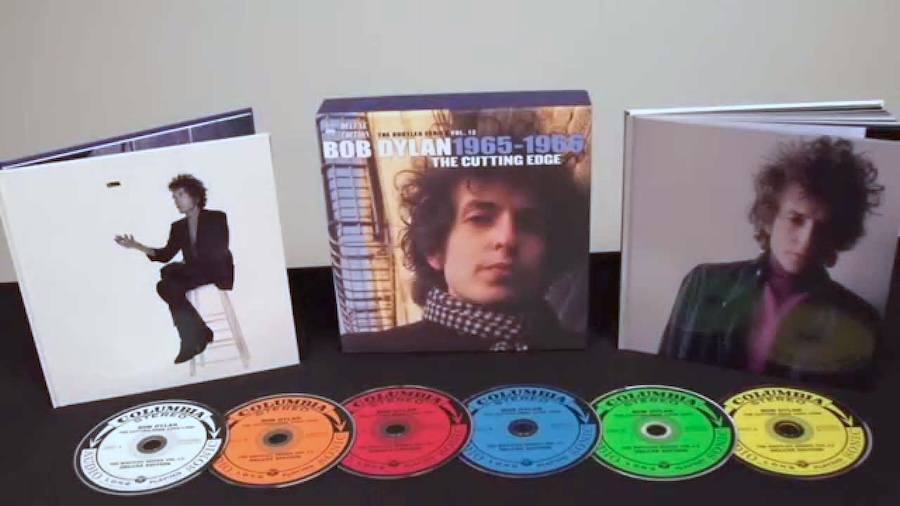
From shunning multiple takes on his debut to knocking out Another Side in one Beaujolais-fuelled evening, Bob Dylan’s early studio ethos was get-it-done. But as The Bootleg Series Vol. 12 – The Cutting Edge 1965-66 shows, he soon learned how to take his time.
Just not on day one of the Bringing It All Back Home sessions. On January 13th 1965, Dylan cut 18 solo takes of 12 different songs, most of which would ultimately be heard on wax backed by a band. The first of The Cutting Edge’s six deluxe edition discs gives us the chance to hear these unused results.
After a breakdown where he stumbles over the words of Love Minus Zero / No Limit, Dylan says he’ll try it again but “if I can’t do it, we’ll do another song”. He’s still in the first-take mindset, where he believes that “I can do any song as good as I can do it the first time”. The full acoustic version suggests otherwise, as his scanning of the words isn’t great in these solo takes. Later, when working with a band – though one take just features Bruce Langhorne on electric guitar – you can hear how Dylan is forced to make his vocals tighter.
There’s a gorgeous solo version of She Belongs to Me that’s slow and considered, with lovely guitar playing from Dylan. It also highlights the final album version’s sublime switch of the line from this take’s “Salute her on Sunday, bow down when her birthday comes” to “Bow down to her on Sunday, salute her when her birthday comes”, which is in place by the electric Take 2, Remake.
She Belongs to Me’s evolution into a BIABH side one song follows a similar path to Love Minus Zero. First just Langhorne’s electric guitar is added then comes the full band accompaniment that we’ll come to know and love. But the song will soon return to its acoustic roots as the solo first-half opener during the 1966 electric tour.
Outlaw Blues has a much more ragged development. Alone, Dylan gives it a gutsy blues feel, like how he sounded on his debut album. The “Austrian mountain range” makes more sense but doesn’t scan as well as Australian. The next version of Outlaw Blues features an additional guitar and The Lovin’ Spoonful’s John Sebastian playing harmonica riffs. Dylan’s vocals are a little unsure, but I enjoyed the raw, jagged blues of this version.
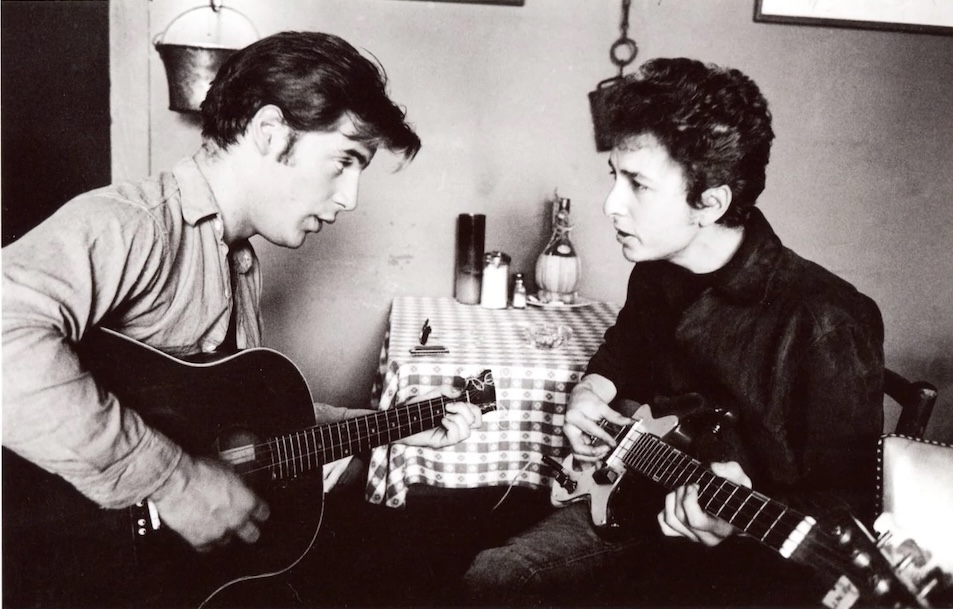
It took three sessions to eventually nail On the Road Again. From the initial version with Dylan playing a tack piano and hiding the humour, through take 4’s jagged rhythms and onto the full remakes, you can hear him poking about to find the song. Close to half of the third day of recording was devoted to 12 different takes of On the Road Again, though most of them were false starts. By contrast, Dylan and his band had started the day by knocking out the master of Maggie’s Farm in one take.
The acoustic version of Bob Dylan’s 115th Dream highlights the parallel to Another Side’s Motorpsycho Nitemare – already evident from BIABH’s laughter-filled intro. It sounds especially lacklustre compared to the full-throttle band version, another one captured in just one take, albeit after a false start. The Cutting Edge also features an excellent solo take of Subterranean Homesick Blues – previously released on Vol. 2 of The Bootleg Series. But this innovative song deserves an electric makeover, like the first remake’s bass line and loose feel, which is quickly refined on the master Take 3.
Mr Tambourine Man moves in the opposite direction to most of BIABH’s songs. Dylan has a couple of attempts with a band but eventually gives up because “the drumming is driving me mad”. In particular, the first takes features an intense tambourine that overpowers Langhorne’s delicate guitar.
These takes let us overhear a conversation between Dylan and producer Tom Wilson that hints at the growing tension between the pair. After Wilson misses some signal, Dylan chides him: “If you look at me Tom, you can see when I wave my hand.” The producer – rather reasonably – retorts that he had “to look down to write the tape number BOB” (emphasis Tom’s). This increasing friction will eventually lead to Wilson being replaced for Dylan’s next album.
Just before that, Dylan was interrupted by Wilson at the beginning of a solo take on It’s Alright Ma (I’m Only Bleeding). The singer then complains that he doesn’t “feel like doing this…it’s such a long song”. But he persists and delivers a potent master take despite the stumbling over the line “false gods I scuff” then follows that with the complete master take of Gates of Eden. After Mr. Tambourine Man, he delivered the master of It’s All Over Now Baby Blue, which he had initially tried on day one and you can hear that lovely unused take on The Cutting Edge.
The BIABH sessions also give us a pair of wonderful solo songs that will later surface on the Biograph and Bootleg Series collections, Farewell Angelina and I’ll Keep It With Mine (I’ll discuss both these songs in detail another time). Plus, we hear two versions of If You Gotta Go, Go Now, a song that featured regularly in Dylan’s live sets around this time. First is an acoustic take before Dylan and his band give the song a pub rock treatment.
We get the start of a promising song called You Don’t Have to Do That, which Dylan cuts off, saying, “I’m going to play on the piano”. Perhaps he then played the piano-led California, which sounds like a remake of Black Crow Blues. It also features a line – “I got my dark sunglasses, I got for good luck my black tooth” – that will make the final version of Outlaw Blues.
This development highlights how little pre-planning Dylan did for these records. So much was still up for grabs as the sessions progressed. That may have had a lot to do with the fact that moving his studio sound from acoustic to electric forced Dylan to learn how to write for and work with a band along the way. This piecemeal process will soon deliver his first rock masterpiece.
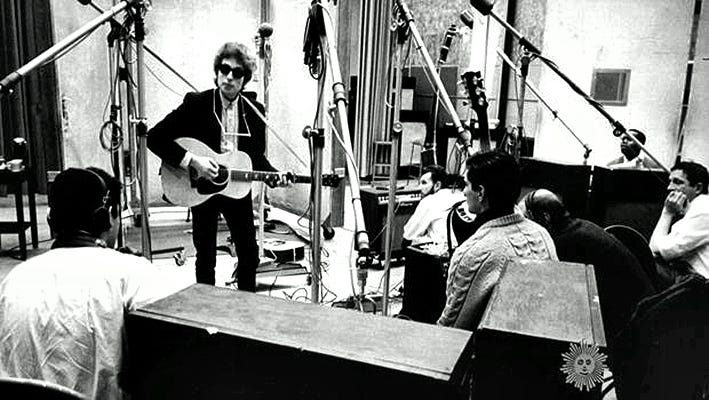
On June 15th, 1965, Bob Dylan entered Colombia’s Studio A in New York to record Like a Rolling Stone. Dylan knew he had the basis of a great song, but as The Cutting Edge shows, he was a long way from knowing what shape it should take. The deluxe edition of the collection devotes an entire disc to the recording of the song that would change music and the musician himself.
We get to hear initial instrumental rehearsals along with Dylan’s croaky first attempts to sing Like a Rolling Stone’s caustic lyrics. The song began life as a waltz, with tip-tapping beats and long, drawn-out harmonica solos. It sounds a lot like the yet-to-be-written Sad-Eyed Lady of the Lowlands. The following day, Dylan and his band abandoned the three-fourths tempo for a gentle remake. You can hear Mike Bloomfield work out his guitar part, while Dylan feels his way towards the right delivery of Like a Rolling Stone’s epic chorus.
By the fourth proper take of the day, the famous snare shot opening is in place, Al Kooper is on the organ just behind the beat and what will become the master version of Like a Rolling Stone is captured. But the group keeps going, upping the tempo, forcing Dylan to cram in the words. Meanwhile, Bloomfield’s playing becomes more jangly and almost surf rock on Take 8. By take 11, the pace has eased again and here the piano gets more of an equal billing with the organ. This could have been an option for the album but for a stumble on the “diamond rings” line that Dylan acknowledges at the end, saying “I’m afraid I screwed up”.
On the final take 15, Dylan sounds tired. As he called it a day, did he know that Like a Rolling Stone was already in the bag back on take 4? The Cutting Edge completes its disc-long devotion to Like a Rolling Stone with each of the original four-track stems. You can hear isolate takes of just Bloomfield’s lead guitar, the piano and bass, Dylan and the rhythm guitar or – my favourite – the organ and drums.
When not messing around on a masterpiece, Dylan also tried the song that will become It Takes a Lot to Laugh, It Takes a Train to Cry. Still called Phantom Engineer, this version is quite bluesy and really starts to swing once the drums come in for the second verse. Dylan returned to the song during the Highway 61 Revisited album sessions in late July 1965. The first rocking takes from this session still bear the imprint of the electric performance at Newport just days before. But after a lengthy lunchbreak of reworking the song, Dylan emerges with a gentler template and new lyrics that you can hear take shape on the remake.
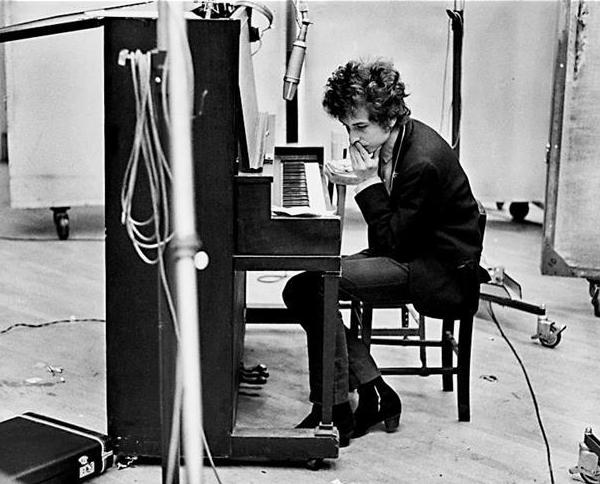
Back during the Like a Rolling Stone sessions, Dylan also cut a song called Sitting on a Barbed Wire Fence. It sounds like a contender for the Like a Buick 6 slot on Highway 61 Revisited. My favourite part of Barbed Wire Fence is when Dylan introduces his LA woman: “Really makes the sweat run down my brow. She’s good all right but she ain’t as good as this guitar player I got right now.” Then he screams and Mike Bloomfield plays a swaggering guitar solo.
Barbed Wire Fence was completed but quickly forgotten, except for phrases about “hungry women” and “won’t tell what I’ve got” that will find their way onto Just Like Tom Thumb’s Blues. Dylan will get around to recording that song when he returns to the studio in late July 1965 to complete his sixth album. Now with Bob Johnston installed as producer in place of Wilson, The Cutting Edge uncovers the process of capturing one of rock’s greatest records.
First up is a funky, seven-minute version of Tombstone Blues. Though Mike Bloomfield and Al Kooper are dynamite on lead guitar and organ respectively, Dylan’s vocals lack energy. He’s much more engaged on the incomplete take 9, which has great backing vocals on the chorus. Also worth noting how the person torturing a thief was first “the blacksmith with freckles” then “John the blacksmith” before going full New Testament.
Later in the day, Dylan had a go at Desolation Row. But drummer Bobby Gregg had gone home so the singer is only backed by a fine Harvey Brooks bass line. We also get the startling image of Casanova being spoonfed “boiled guts of birds”. Dylan returned to Highway 61 Revisited’s epic closing song during a later session. The Cutting Edge gives us the chance to hear a tantalisingly short piano demo whose grandiose arrangement sounds like the famous piano exit of Layla. A full band version of Desolation Row – drums and all – that varies the pace and the melody is also worth a listen, especially as it doesn’t feature a harmonica – a notable absence from some of these Highway 61 outtakes.
That productive first day of album recordings saw Dylan cut masters of It Takes a Lot to Laugh, It Takes a Train to Cry and the non-album single Positively 4th Street. Early arrangements of Black Daily Rue (as Dylan initially slates the latter) are too gentle for those vicious lyrics. On the following day Dylan turned to Like a Buick 6. Take 1 never gets going but suggests a different, more swinging style for the song. By Take 4, the band has landed on something close to the final version – albeit more baroque and pacy.
The initial, somewhat flat takes of Highway 61 Revisited’s title track highlight what the weird police siren whistle adds to the song’s sense of insanity. But take 5 does have a cracking bass line. It’s fun hearing Dylan’s amused reaction to the introduction of Highway 61 Revisited’s signature siren on the false start take 7.
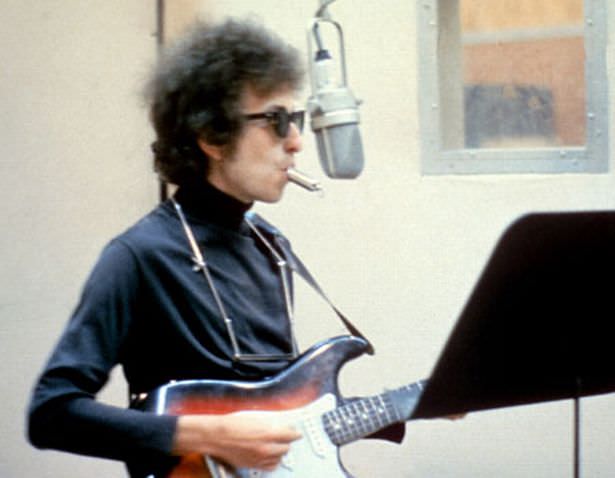
Early versions of Just Like Tom Thumb’s Blues are very mellow – the aborted take 1 almost has a bossa nova shuffle. The song has nearly found its stride by Take 3 but it’s still too tame. Many more efforts follow until Take 13 reveals that Dylan and his band are on the cusp of perfection.
The second take of Queen Jane Approximately features Al Kooper playing a twinkling celesta, a keyboard-based instrument that sounds like a glockenspiel. It gives a sweet pop sound to a song that will toughen up slightly for its inclusion on Dylan’s rock album. Meanwhile, Ballad of a Thin Man is largely in place by take 2 with Al Kooper already adding those wild organ swirls.
By October 1965. Highway 61 Revisited has been on sale for a month. But that restless hungry feeling means Bob Dylan is recording again. The second half of the deluxe Cutting Edge starts with the studio fumblings that will eventually lead to Blonde on Blonde.
Recorded with The Hawks, Medicine Sunday is a minute-long fragment that straddles both records, sounding like Just Like Tom Thumb’s Blues while temporarily talking like Achilles: “I know you want my loving but mama you’re so hard” Jet Pilot is another short song, a cracking 8-bar blues that doesn’t outstay its welcome in setting up and delivering a now-dated punchline. The song will first show up officially on the 1985 Biograph collection.
The main purpose of this session was to record I Wanna Be Your Lover. Another Biograph cut, this song starts out as almost proto-Led Zed hard blues coupled with early Beatles romantic coyness in its “I wanna be your partner” chorus. By Take 6, I Wanna Be Your Lover is a fun rock song with a jangling organ and raunchier lyrics that would have been perfect for Highway 61 Revisited. But ultimately, Dylan is moving on from that record, trying to find a new sound. We can literally hear it happening on an instrumental track as Dylan and his band flitter between styles, moods and tempo. While there’s a lot of Like a Rolling Stone in this track, we also get hints of where Sooner or Later will come from.
The session also featured a couple of hesitant takes on Can You Please Crawl Out Your Window? This song was initially attempted during the Highway 61 sessions, where Take 1 opens with a duelling Jingle Bells on guitar and celesta. It’s another song with Tom Thumb parallels but by take 17, it starts to sound more like its own thing. Still not quite there though and Dylan will return to it during another session at the end of November.
That session’s complete take 6 of Crawl Out Your Window is more of a Blonde on Blonde song. But the resulting single failed to crack the top 50, while also leading Dylan to dismiss an unimpressed Phil Ochs with “you’re not a folk singer, you’re a journalist”. He then stopped the car they were riding in and make Ochs get out and walk. This was peak mean-Bob.
The late November session is most notable for Dylan’s first attempt to capture Visions of Johanna. In the first batch of rehearsal recordings, it’s an upbeat song, fast-paced and packed with fantastic drums fills. If it wasn’t seven and a half minutes long, Take 5 would surely have been a radio hit. I also love the growl he gives to the final word of “infinity goes up on trial”. By takes 7 and 8, much of the pace has been taken off Visions of Johanna, though as Dylan says of take 7, “that’s not right at all”. Take 14 is close to going full country with a twanging steel guitar.
However, Dylan wasn’t satified with any of these Johannas and also struggled with another song, She’s Your Lover Now. The multiple takes of this on The Cutting Edge suggest the song was only half-written. Dylan’s dissatisfaction with his band during these sessions led to his legendary collaboration with the Nashville players, which we explored extensively in the chapter on Blonde on Blonde.
One positive was Sooner or Later, the only song from these New York sessions that did make it to Blonde on Blonde. Though even here, the rehearsals show that Dylan was still writing the song in the studio. The bluesy, half-baked Lunatic Princess has ideas that would find their way onto Blonde on Blonde through other songs like Leopardskin Pillbox Hat. Clinton Heylin even suggested that Dylan resurrected its groove a decade later on Slow Train Coming.
If the old get-it-done Bob Dylan was gone for now, he was about to find an effective new model in Nashville. Fourth Time Around was the first song Dylan attempted with the Nashville players. While they had 20 different goes at the song, most were rehearsals or false starts and only take 11 is included on the deluxe edition of The Cutting Edge, which sees the collective closing in on the final version.
If the sound of Fourth Time Around was largely in place from the off, Leopard-Skin Pillbox Hat takes a more meandering path. The drawling Delta blues twist on take 3 could be a BB King song, while the swinging take 8 starts with a doorbell ringing and the band chanting “who’s there?” like a 50s novelty song.
The Nashville players needed just one take for Rainy Day Women #12 & 35. But it’s worth hearing their short rehearsal before the first take, where they dream up the blaring intro and Johnston urges them not to “lose this beat”. Adding to the giddy, off-the-cuff vibe, the producer asks for the name of the track and Dylan responds, “a long-haired mule and a porcupine here”.
Dylan and his band completed three late-night takes of the lengthy Sad-Eyed Lady of Lowlands. Take 1 is included in the deluxe Cutting Edge where, remarkably, Dylan still hasn’t settled on the final version of the key opening line.
Stuck Inside of Mobile was a much more drawn-out process, taking up an entire day in the studio. During the initial rehearsals, the band developed ideas which started to take shape by the end of the second practice. Take 5 of Stuck Inside of Mobile has a soulful rhythm and stately pace but Dylan’s vocals are anaemic and the lyrics are still not all in place. But by takes 13 and 14, this tricky gestation is close to bearing wonderful fruit.
I like the jaunty Take 4 of Just Like a Woman, with a full-on drum sound that Johnston calls “one hell of a beat” and Dylan’s loose vocal where “Queen Mary” is “Annie”. By take 8, the band had settled on a sound, even if Dylan still hadn’t done the same with the lyrics. Nailing the master only happened on take 18.
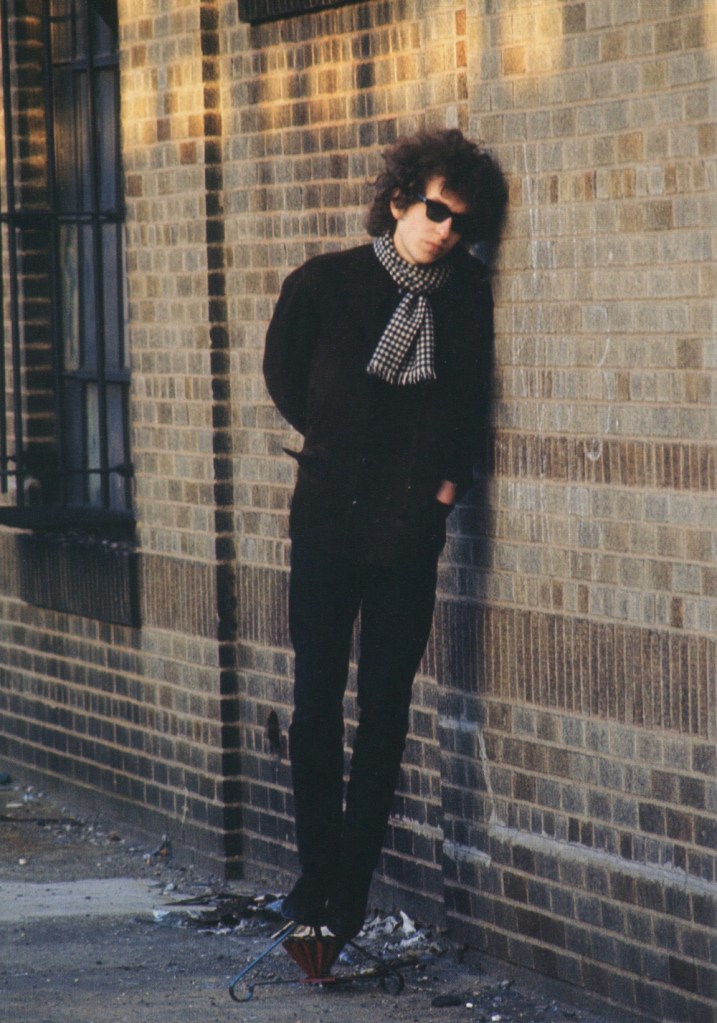
The deluxe edition of The Cutting Edge rushes towards the finish with just one take of the remaining Blonde on Blonde songs. Dylan and his band were now gelling, with Absolutely Sweet Marie in the can by the first full take after the initial alternate take.
Take 1 of Pledging My Time has a fun bar room feel with a steady tambourine rhythm. But following a short rehearsal, the band reworked the song to the final album version that they captured on take 3. Most Likely You Go Your Way is largely in place during Take 1, though it’s missing the brass and exuberance of the final album version. Simpler songs like Temporary Like Achilles and Obviously Five Believers were done in four takes without changing too much. So it’s nice to hear something different with the electric organ lead on take 4 of I Want You.
Dylan had smoothed out his process for writing for and recording with a band by the final Blonde on Blonde sessions. But he was also now seeing songs as ever-evolving creations. The brilliant animation studio Pixar has a maxim that their films are never finished, but they do have release dates. Dylan too had release dates so we get fixed versions of songs on his albums. But he also has live performances that allow him to continue tinkering.
For Dylan, songs are a never-ending process, one that can lead to me sitting in the London Palladium in 2017, needing two minutes to realise that he’s singing Blowin’ in the Wind. While this frustrates some fans, Dylan’s insistence on taking his own path is why many of us become the kind of people who will sit through the deluxe Cutting Edge’s six hours of outtakes. Though even I’m not a big enough fan to take on the Collector’s Edition’s 18+ hours.
Is The Cutting Edge worth the time? As someone who spends a lot of time writing about Dylan’s recordings, of course I’d say yes. It’s fascinating to hear how the songs are shaped and remade, especially as after Blonde on Blonde, he’ll return to a more instinctive, few takes recording styles for the next batch of release. But ultimately, few of these outtakes better what I can hear on the related albums. After this revisit, I can’t imagine going back to it often.

What do you think of The Cutting Edge? Is it more than an interesting historical document? Are there versions on here that you prefer? Let me know in the Comments.


Leave a comment