
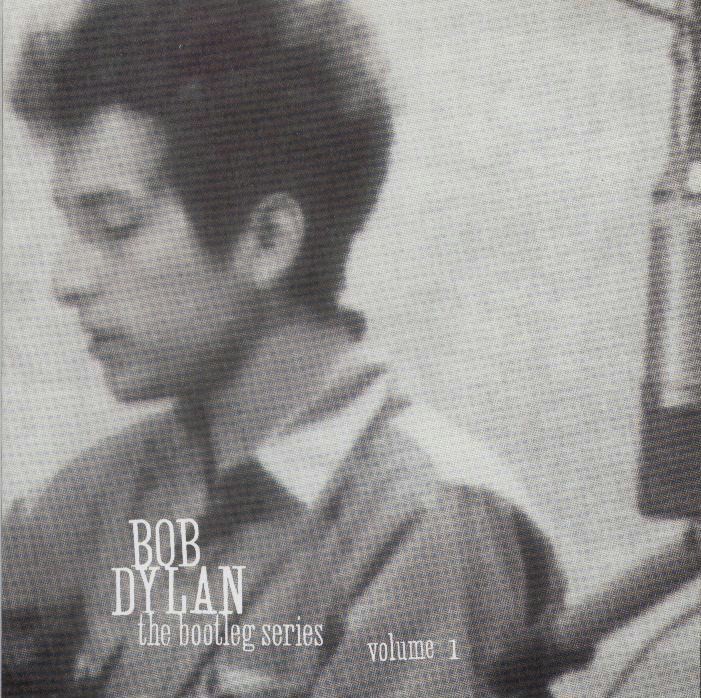
Released in March 1991, the first Bootleg Series collects previously unreleased recordings from an extraordinary 18 months in Bob Dylan’s early career.
Share this post with your followers:
Between April 1962 and January 1964, Bob Dylan released three albums containing 25 original songs, plus the non-album single, Mixed-Up Confusion. But that represents less than half of the songs he wrote then recorded or played live during this period of 22 months. Vol. 1 of The Bootleg Series collects much of that unreleased material.
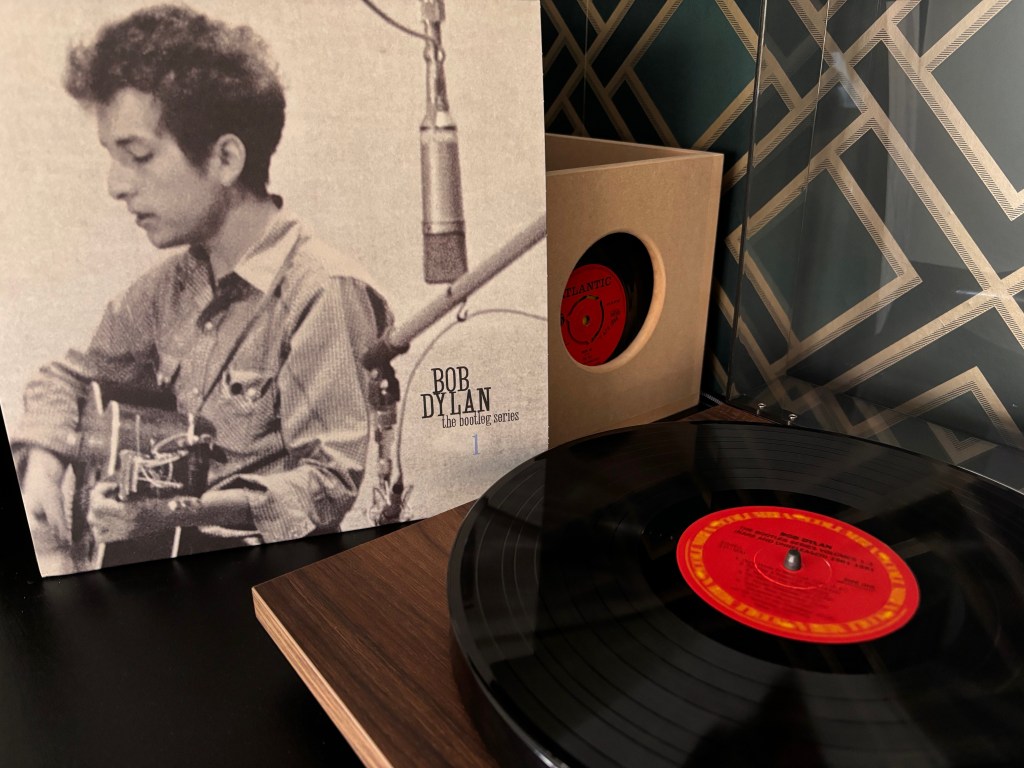
The collection opens with Hard Times in New York Town. This excellent recording is taken from the Minnesota tapes, made by Dylan’s friend and mainstay of the Minneapolis folk scene Tony Glover at the apartment of Dylan’s sometimes girlfriend, Bonnie Beecher.
The song covers the same territory as Talkin’ New York from Dylan’s debut album, though with fewer jokes. Dylan had been away from Minneapolis for just over two months but had returned to the city to impress his friends with his tall tale of hard travelling.
Hard Times in New York Town is closely based on the Southern traditional Down on Penny’s Farm and features fine guitar picking from Dylan. More than the story he told, what amazed his old acquaintances was his enhanced performance skills.
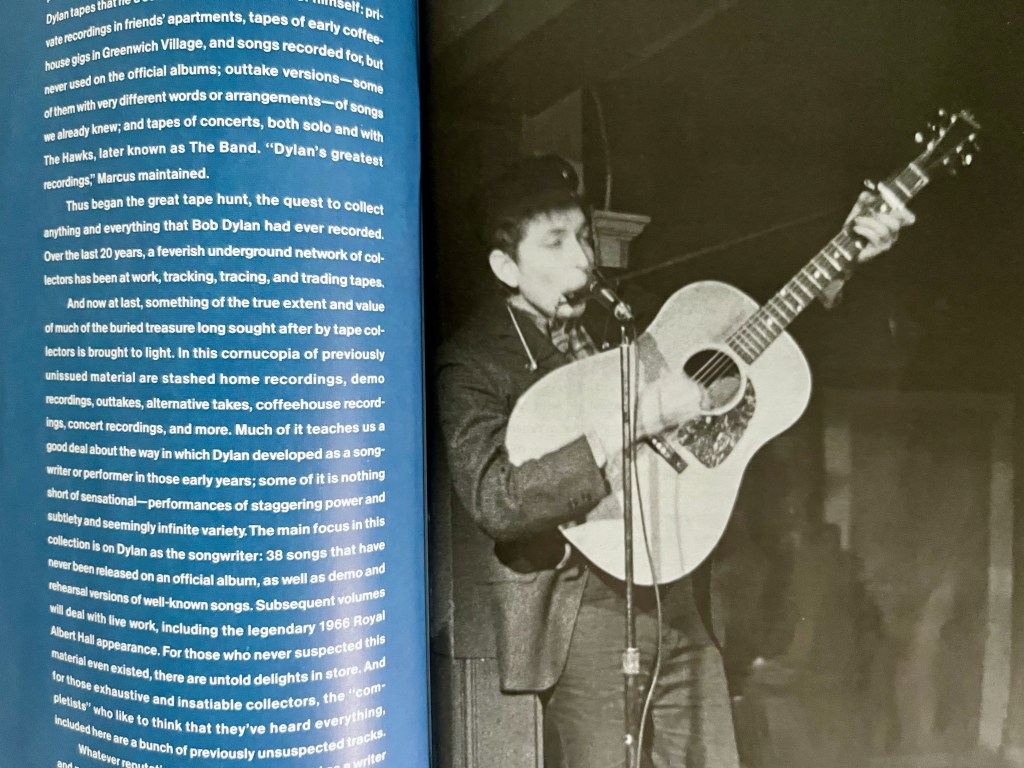
Jon Pankake – editor of local folk paper The Little Sandy Review and a victim of Dylan’s light-fingered approach to other people’s record collections – is quoted in the superb booklet that accompanied this first Bootleg collection, saying, “The change in Bob was, to say the least, incredible.”
Bootleg Vol. 1 features three outtakes from sessions for Dylan’s self-titled debut album, which I discussed in my revisit to that record. But it’s always worth restating that his take on He Was a Friend Of Mine is really lovely.
The collection also includes Dylan’s only performance of the traditional song No More Auction Block, which took place at The Gaslight Café as covered in my revisit to those bootleg tapes.
Much of the first Bootleg collection is taken up by outtakes from The Freewheelin’ Bob Dylan. Talkin’ Bear Mountain Picnic Massacre Blues was a live staple and another song I explored in my Gaslight revisit. This studio version is fine but as ever the talkin’ blues format works best with an audience.
The Bootleg booklet features extensive song notes by John Bauldie. In discussing Bear Mountain, he quotes Dylan’s friend and first manager, Terri Thal who believes that the song showed how “he was beginning to think about and talk about people who were being trod upon.”
Some of the Freewheelin’ outtakes were initially included on early pressings of the record, like the superb Let Me Die in my Footsteps. Dylan says he initially conceived of the song after watching people build a fallout shelter, though only wrote it down after carrying it around in his head for a couple of years. His eventual response to the fear stalking cold war America is an anthemic call to walk tall and experience the world.
Dylan’s exhortation to “Let every state in the union seep deep down in your souls” echoes the songs of his hero Woody Guthrie, while the characterisation of people who “instead of learnin’ to live, they are learnin’ to die” foreshadows the acerbic edge he would bring to his own work. He would soon better his take on this topic with the more complex and poetic A Hard Rain’s a-Gonna Fall, one of the newer songs that pushed Let Me Die In My Footsteps off the final version of Freewheelin’.
Another late cut to that record was Rambling, Gambling Willie, an absolute belter of a song about a mythical gambler. The story is likely inspired by Wild Bill Hickock – unfortunate holder of the dead man’s hand, “aces backed with eights”.
The music is based on the Irish traditional, Brennan on the Moor. Dylan learned it from Liam Clancy, who questioned why he was trying to sound like an old bluesman on Rambling, Gambling Willie. Was this criticism why it didn’t make the final album?
As his songwriting developed over the year of recording The Freewheelin’, Dylan’s new material like Masters of War and Girl From the North Country began to make some of his older songs sound tired. But as The Bootleg Series Vol. 1 reveals, they’re still songs worth hearing
With its hard blues guitar playing and vocal growls, Quit Your Low Down Ways wouldn’t sound out of place on Dylan’s debut album. This original draws from the blues standard Milk Cow Blues, particularly Kokomo Arnold’s yelping version from 1934. Though Dylan was probably also familiar with Elvis Presley’s boogie-tastic take.
Dylan’s only recorded live performance of Quit Your Low Down Ways happened in Montreal, which I covered in my Finjan Club revisit. But the song would have an extended life beyond its writer in cover versions by Peter Paul and Mary, The Hollies and Manfred Mann’s Earth Band.

Kingsport Town continues that debut record’s links to Woody Guthrie, as it’s based on the latter’s Who’s Going to Shoe Your Pretty Little Feet? But Dylan’s song is most interesting for another chance to hear Bruce Langhorn accompany him on guitar. Langhorn also played on that stand-alone electric single Mixed-Up Confusion and would later contribute beautiful counter-melodies on Mr. Tambourine Man.
The gentle and vulnerable Worried Blues sounds a lot like Don’t Think Twice, It’s Alright, but without the lyrical spark that makes the latter such a gem. It’s also worth noting that a line from Worried Blues – “I’m going where the colours suit my clothes” – was later referenced on Fred Neil’s Everybody Talkin’, the song that replaced Lay Lady Lay on the Midnight Cowboy soundtrack because Dylan didn’t finish his commission in time.
Talkin’ Hava Negeilah Blues is a short, novelty song that has a little place in history as one of the songs mentioned by Robert Shelton in his famous 1961 New York Times review of an early Dylan performance at Gerde’s Folk City.
Walls of Red Wing was part of the final Freewheelin’ session when Tom Wilson had replaced John Hammond in the production booth and it certainly sounds bolder. The music is based on Scottish ballad The Road and the Miles to Dundee, which may have been another of those tunes that Dylan learned from Martin Carthy during his formative weeks in the UK towards the end of 1962.
Dylan moves the setting of Walls of Red Wing from Scotland to a real-life, grim Minnesota borstel. Despite the subject being close to home for its writer, the details of song don’t convince in the way that he later will on another song set in his home state, North Country Blues.
The Bootleg Series Vol. 1 includes three songs that Dylan recorded as demos for his publisher Witmark. All of these demos were later featured in Vol. 9 of the Bootleg series, which I’ll be revisiting shortly.
The Witmark demos on Bootleg Vol. 1 include the very catchy, Walkin’ Down the Line, which features the fine lines:
“I see the morning light / It’s not because I’m early riser / I didn’t to sleep last night”.
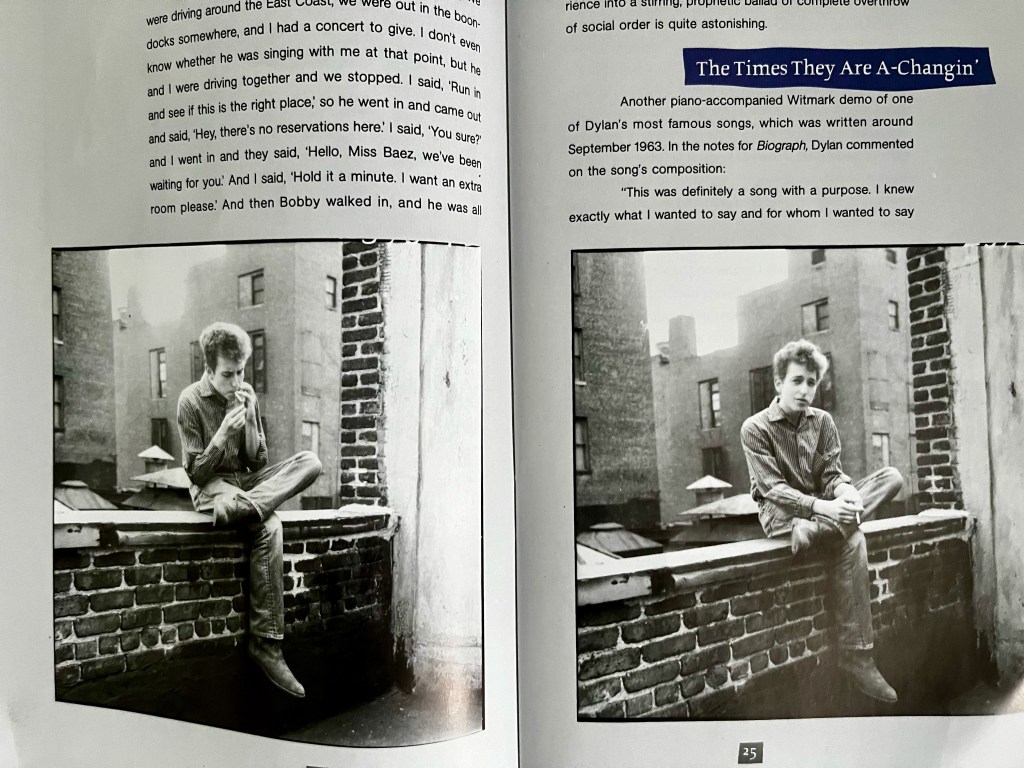
When recording for Witmark, Dylan played his iconic The Times They Are a-Changin’ on the piano, as well as When the Ship Comes In from the same album.
Another piano song is Paths of Victory, a wonderful outtake from those Times sessions. Dylan reworked an obscure gospel song into a fist-pumping anthem in the mould of When the Ship Comes In, but it was probably too optimistic for the often-bleak final album.
A few months before releasing The Times They Are a-Changin’, Bob Dylan introduced his new songs, including the album’s title track, at Carnegie Hall. The complete recording of the show has been released in dribs and drabs over the years, with two songs on Bootleg Vol. 1.
First is Talkin’ John Birch Paranoid Blues – the controversy around which I covered when I revisited his Brandeis University set. Dylan’s introduction here acknowledges the fuss about the subject matter that eventually let to it being cut from The Freewheelin’: “…and there ain’t nothing wrong with this song.”
Who Killed Davey Moore? is a powerful plucked-from-the-headlines song about the titular boxer who died from injuries sustained in the ring. Dylan reworks the old nursery rhyme Who Killed Cock Robin? to apportion blame for Moore’s death to everyone from the other boxer and referee to sportswriters and fans. In this sense, it echoes Only a Pawn in Their Game in his attempts to look beyond the obvious culprit and explore the bigger social picture.
Dylan never attempted to record Who Killed Davy Moore? in the studio but you can hear its power for a live audience as a ripple of spontaneous applause breaks out in the Carnegie crowd during the climatic line, “I hit him, I hit him, yes it’s true”.
Only a Hobo is the spiritual follow-up to one of Bob Dylan’s first songs, Man on the Street. This simple lament for a dead homeless man is influenced by The Carter Family’s Railroading on the Great Divide. Dylan would also record the song for the 1963 Broadside Ballads collection under the pseudonym, Blind Boy Grunt.
He’d make a surprise return to Only a Hobo a decade later when collaborating with Happy Traum to rework some of his older songs for Greatest Hits Vol. II. But that fine version too was cut from the final record, eventually getting an official release on Another Self Portrait.
I talked about the stunning Moonshiner when I revisited The Gaslight Tapes. It’s such a beautiful song that it must have been difficult to leave it off the Times album. The esteemed Dylan writer Michael Gray has a superb talk about Dylan’s greatest rejected album tracks where he highlights the stillness in this remarkable performance of Moonshiner.
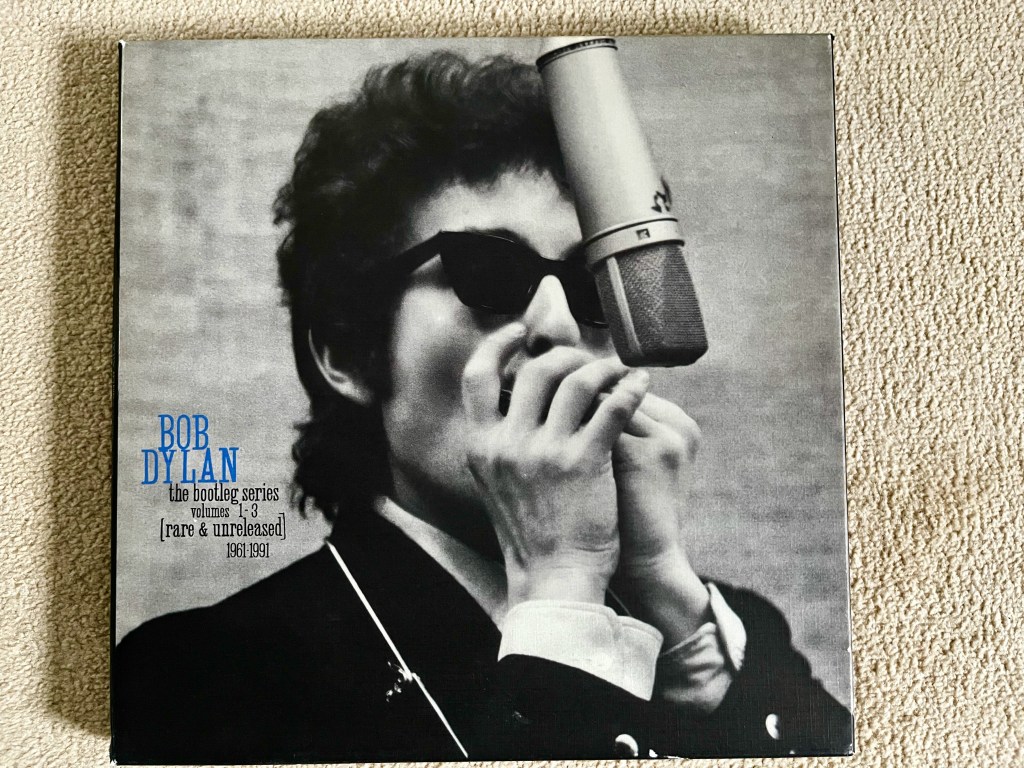
The first three volumes of The Bootleg Series were released as a box set covering Dylan’s career from 1961-91. While this revisit is focused on Vol. 1, I’m sneaking ahead to what is technically Vol. 2 in order to incorporate the final outtakes from the The Times They Are a-Changin’ sessions.
Seven Curses is the tragic tale of a corrupt judge, who takes advantage of a young woman, which echoes the traditional Maid Freed from the Gallows and Judy Collins’ Anathea. Dylan’s stunning version of the story is enhanced by his decisive delivery and light-fingered guitar, while the titular litany of afflictions wished on the judge at the end is a highlight.
With its failed appeal to justice, Seven Curses echoes another Dylan composition from this time, Percy’s Song. The latter had been previously released on 1985’s Biograph compilation, which presumably explains its absence on Bootleg Vol. 1.
The delightful Eternal Circle sees the singer lock eyes with a woman in the audience who is watching him perform. He wants to talk to her but “the song it was long and I’d only begun”.
Eternal Circle concludes its winding tale with an amusing twist – one my favourite Dylan punchlines. Dylan recorded 12 takes of the song during The Times They Are a-Changin’ album sessions but wasn’t satisfied with any of them. It also did not fit with the downbeat mood of the rest of that album.
Despite all these takes, it was once thought that this was the only available recording of Eternal Circle, which led Christopher Ricks to note that “there is something at once endearing and eerie about having only one performance of a song about performing.” But since then other versions of Eternal Circle have been uncovered including an excellent rendition at London’s Royal Festival Hall in 1964.
Suze (The Cough Song) is a rare Dylan instrumental, truncated by the titular throat clearing. It will eventually be resurrected a decade later as Nashville Skyline Rag. This recording ends with producer Tom Wilson wryly commenting, “I’ll note here: ‘Fade at Cough’”.
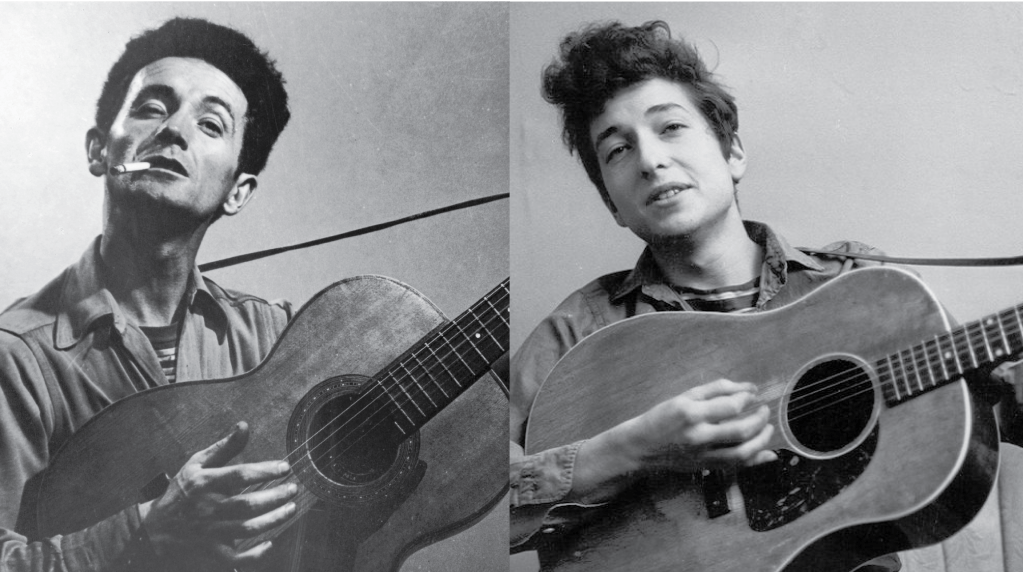
Finally, let’s return to Vol. 1 of The Bootleg Series for its extraordinary closing track. Last Thoughts on Woody Guthrie is a live spoken word piece, as performed by Dylan at New York’s Town Hall in April 1963.
After being asked to sum up what Guthrie meant him in 25 words, Dylan wrote five pages that translates into a seven-minute burst of glorious poetry. I first heard Last Thoughts on Woody Guthrie as a teenager and it blew my mind.
My prior experience of poetry was largely confined to the safe school textbook standards. The pulsing rhythm and avalanche of images on Last Thoughts was a revelation, especially those opening lines:
“When your head gets twisted and your mind grows numb. And you think you’re too old, too young, too smart or too dumb.”
Revisiting it today, its unfinished state is more apparent. But how good is this first draft? It concludes with one of the most eloquent tributes I’ve ever heard, as Dylan says that you can find both god and Woody Guthrie “in Grand Canyon at sundown”.
When The Bootleg Series Vol. 1-3 were released in 1991, I was a new Bob Dylan fan. I bought the box set and loved what I heard, but I couldn’t truly appreciate what this material represented.
At that point, I had only heard a handful of Dylan’s albums so didn’t have the complete context for this treasure trove of outtakes. I certainly didn’t appreciate that the material on Vol. 1 represent his castoffs from just two astonishing years of songwriting.
Outtake and B-side collections are usually aimed at the hardcore. But new or casual Dylan fans will find much to love on The Bootleg Series Vol. 1. It’s a remarkable record of the relentless tide of songs that flowed from him during this time.
What do you think of The Bootleg Series Vol. 1? Let me know in the Comments below.


 Home
Home 
Leave a reply to colmlarkin Cancel reply