
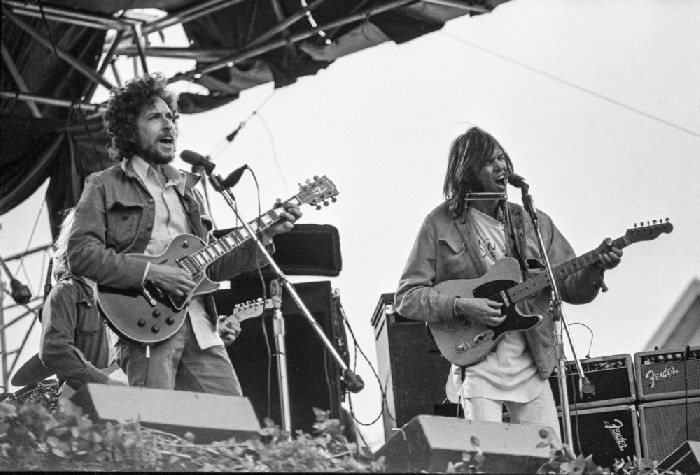
You don’t often see Bob Dylan in a supporting role. But at the SNACK Benefit Concert at Kezar Stadium on the edge of San Francisco’s Golden Gate Park on March 23rd 1975, he’s essentially a backing musician for the event’s headline act, Neil Young.
A few years earlier, Dylan had detected a sign that his status had shifted. In 1972, Young’s Heart of Gold went to no. 1 in the US singles chart and every time Dylan heard the record on the radio, he resented its success because the song sounded so much like one of his. In an interview with Spin magazine a decade later, Dylan remembered thinking, “If it sounds like me, it should as well be me.”
This envy of Young’s success with Dylan-esque material eventually helped spark Dylan’s emergence from his early 70s self-imposed obscurity. Following his record-breaking arena tour of 1974 and with the critically acclaimed Blood on the Tracks having just come out in January, Dylan arrived in San Francisco as a renewed force in rock music. But since his emergence in the mid-60s, Neil Young had built a fanbase strong enough to rival that of his predecessor.
Young started out in his native Canada as a solo artist performing in the same circles as Joni Mitchell, before joining a local band Mynah Birds, fronted by future funk Super Freak, Rick James. The group was signed to Motown and due to start recording, when James – a US Marine gone AWOL – was apprehended and detained by the navy. With the future of Mynah Birds up in the air, Young and the band’s bassist Bruce Palmer drove to LA in a hearse.
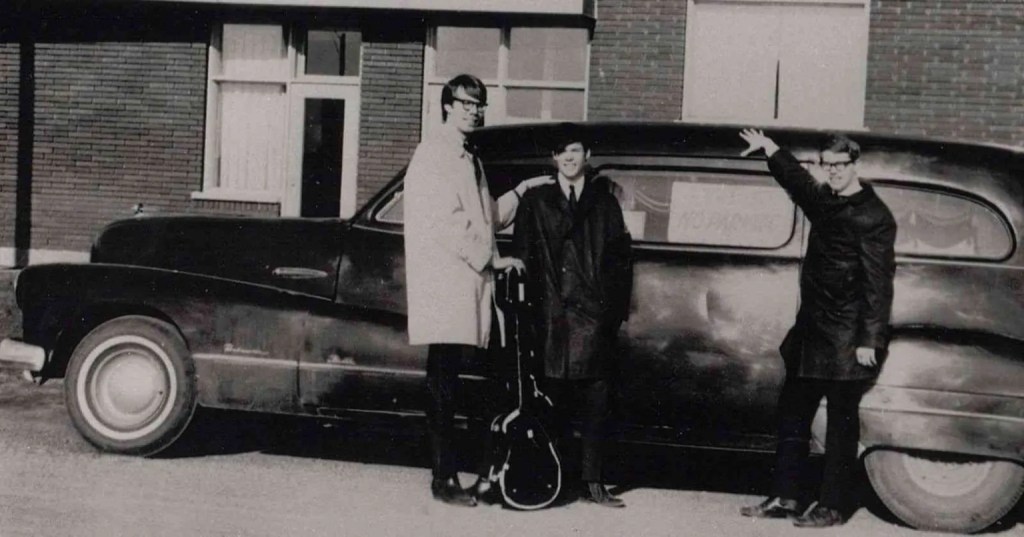
There the pair met up with an old acquaintance, Stephen Stills, and formed Buffalo Springfield along with Richie Furey and drummer Dewey Martin. They found early success based on the Stills-penned single, For What It’s Worth, though Buffalo Springfield’s debut release was Young’s song, Nowadays Clancy Can’t Even Sing, which was a minor hit. However, internal tensions and Palmer repeatedly getting deported for marijuana possession soon led to the end of Buffalo Springfield.
Next, Young signed a solo deal with Reprise Records, releasing two albums in the late 60s. He recorded the second of these – Everybody Knows This Is Nowhere – with an early incarnation of Crazy Horse, the band that would become Young’s most frequent and closely-associated musical collaborators. But a different group was in Young’s immediate future when his old bandmate Stephen Stills tapped him up to help with Crosby, Stills & Nash’s live shows.
The supergroup included David Crosby of The Byrds, whose acceptance of an invite from Stills to fill in for the departed Young at a Buffalo Springfield live show had annoyed his bandmates so much, it contributed to them firing him. Englishman Graham Nash had met both Crosby and Stills while touring the US with his group, The Hollies. When the trio sang together at a party in LA’s Laurel Canyon, they discovered that they had a unique vocal chemistry. So Nash quit The Hollies and Crosby, Stills and Nash was born.
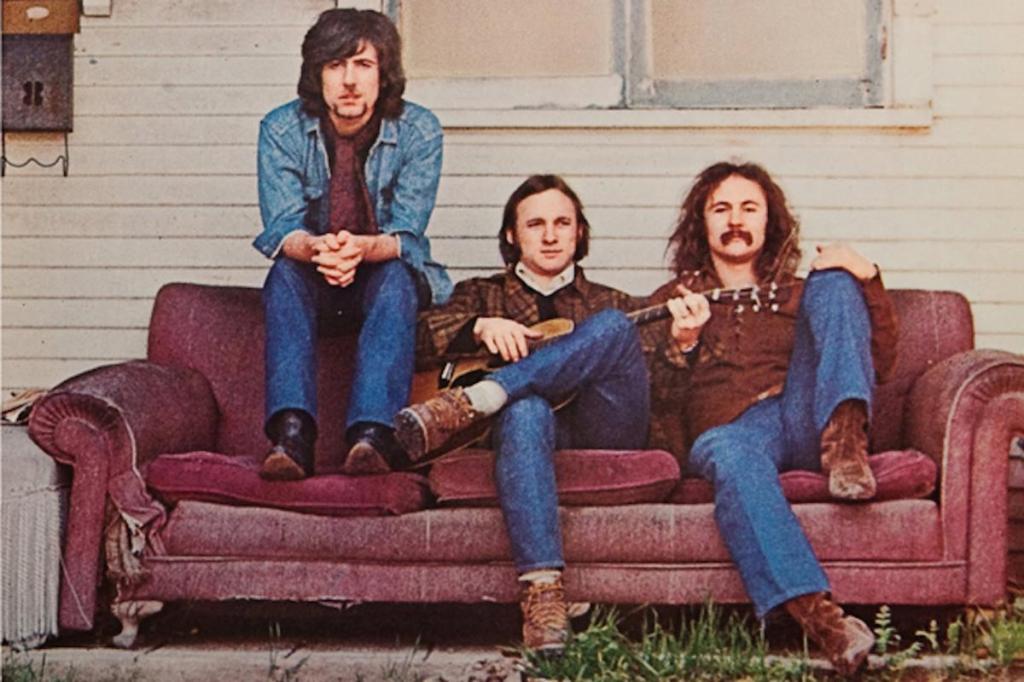
Atlantic Records head Ahmet Ertegun had been a fan of Buffalo Springfield and so jumped at the chance to sign Stills’ new project. His enthusiasm was rewarded by the group’s quadruple platinum selling self-titled debut album and two Top 40 singles, Marrakesh Express and Suite: Judy Blue Eyes. To capitalise on this success, the trio embarked on a US tour. But as this required additional musicians. Ertegun suggested another Buffalo Springfield alum, Young, who was managed by the same person as the trio.
Young agreed to join though insisted on being made an official fourth member. Crosby, Stills, Nash & Young’s second-ever live performance was in front of tens of thousands of people at the Woodstock Festival. However, you won’t see much of Young in the video footage of that performance as he threatened to punch the cameraman if he tried to film him.
The Canadian contributed songs to the expanded group’s next album, Déjà Vu, which was another chart-topper. But as with Buffalo Springfield, tensions with Stills soon led to the band’s dissolution. One story goes that during a show at New York’s Fillmore East, Stills heard that Bob Dylan was in the audience so improvised an extended guitar solo. The other three were so annoyed by this, they quit the group mid-tour. It probably didn’t help that Stills’ girlfriend Rita Coolidge (who will go on to feature in the movie Pat Garrett and Billy the Kid alongside Dylan) left him for Nash around this time.
Back as a solo artist, Young released a pair of albums that made him an even bigger star: After the Gold Rush and Harvest. Both were notably more mellow than his previous work, with the sound of Harvest dictated by a back injury that prevented Young from playing electric guitar. That album’s rowdiest song, Are You Ready for the Country? is an apt opener for the SNACK Benefit performance with a full band, which included two members of the Harvest backing group, The Stray Gators: guitarist Tim Drummond and Ben Keith on pedal steel.
Levon Helm, Rick Danko and Garth Hudson of The Band completed the line-up along with their erstwhile mentor, Bob Dylan as a surprise guest. Young’s compatriots Danko and Helm had played on his 1974 album On the Beach but there was also an older connection. Back in Toronto in 1964, Hudson and Helm had protected Rick James from an assault on the street then took him to a nearby bar. After a nerve-settling drink, James joined in with the bar’s band who later invited him to be a fulltime member of what eventually became the Mynah Birds.
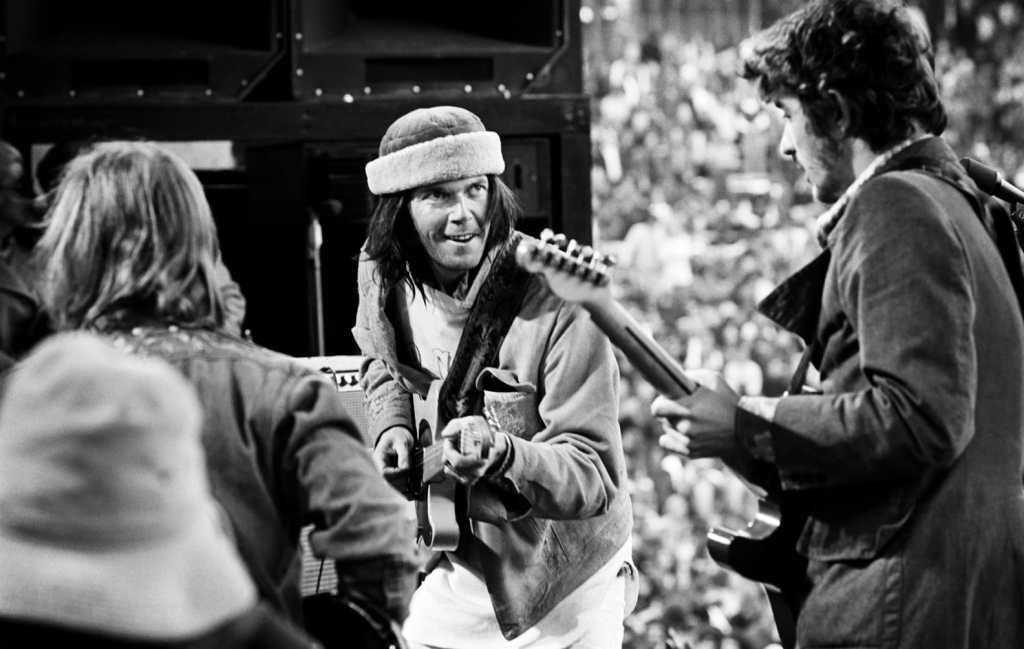
Young and his cobbled together SNACK Benefit band hit the ground running on a raucous Are You Ready for the Country? Dylan plays melodic harmonica responses to Young’s lead vocals, Danko sings along with gusto and Hudson adds a fine organ solo. The Kezar crowd’s response is wild and while much of the excitement must have been about seeing Dylan and Young on the same stage, the latter is the main draw.
A little later, a woman screams “Neil I love you” just before he introduces “a new tune for you”, Looking for a Love. That song will appear on his Zuma album later in the year, though won’t feature Keith, whose twangy pedal steel gives this live version a country feel. The verse’s rising melody anticipates Ob-La-Di, Ob-La-Da and Looking for a Love shares some of that Beatles song’s tweeness.
Young’s music didn’t always receive critical acclaim at the time. Even the now-classic Harvest was criticised by contemporary reviewers for the “overblown” orchestral arrangements on two of its songs. Young later recalled that Dylan told him he liked the strings and that was good enough for the Canadian. While Dylan may have envied Young’s FM popularity, he admired and respected him and the feeling was more than mutual. By the end of the SNACK set, Dylan will share the spotlight in a playful collaboration that Young will call “an early highlight of my life”.
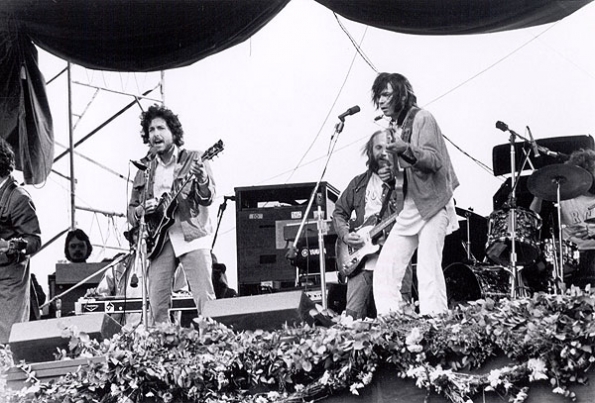
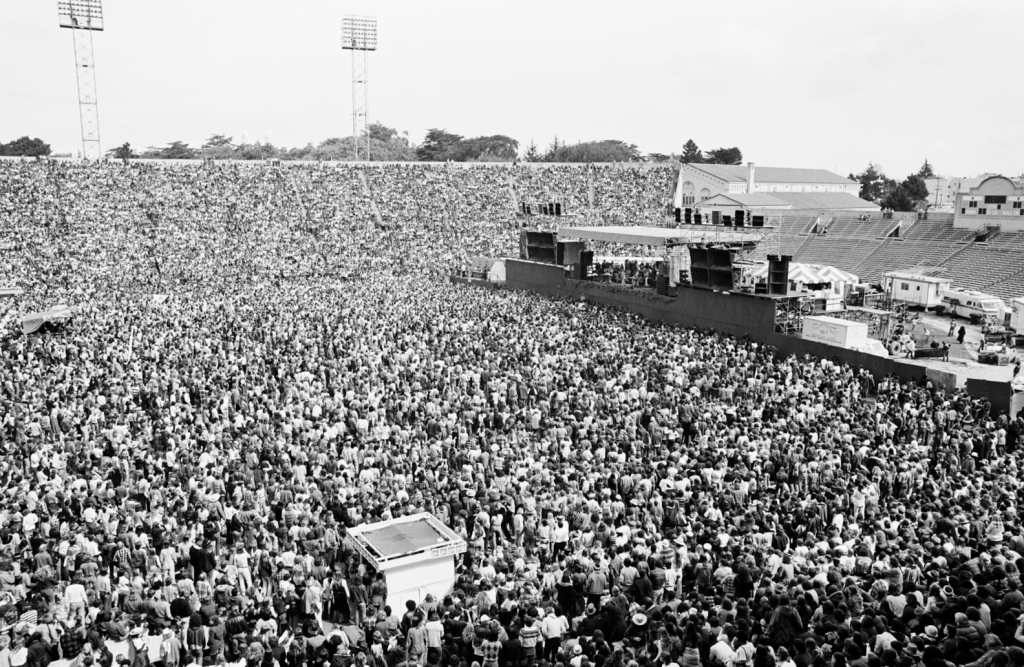
The reason that 60,000 people had packed Kezar Stadium for Young’s memorable music moment was the more prosaic matter of a local government budget crisis. In early 1975, the San Francisco Unified School District was forced to drop sports, arts and other extracurricular programmes from its schools due to a $3 million funding gap. Concert promoter and Bay Area resident Bill Graham – a German-born Jew who fled the Nazis as a child but whose mother died on the way to Auschwitz – was appalled by the news and pledged to raise money to support these activities.
He gave his efforts the name Students Need Athletics, Culture and Kicks – SNACK for short – and summed up his motivation as “We make our living from the youth of San Francisco. This is one way we hope to thank them.” In just over a month, Graham went from an outrage-inspired idea to thousands of young people camped overnight in Golden Gate Park awaiting the 6am opening so they could get the best view of acts like The Doobie Brothers, The Grateful Dead, Jefferson Starship, Santana, Tower of Power, Joan Baez and Neil Young.
The SNACK Benefit was the “largest rock benefit concert ever” at that time, according to Rolling Stone. The magazine also noted that the event drew a much larger crowd than the 1971 Concert for Bangladesh at Madison Square Garden in New York. While rumours of Dylan’s presence at that event had preceded his arrival onstage – even if organiser George Harrison wasn’t sure if the reluctant performer was going to show up until he saw him standing in the wings – the SNACK Benefit crowd had no idea Dylan would be joining Young at Kezar Stadium.
Rolling Stone suggested that even as Dylan ambled about onstage while Graham announced the roll call of musicians, few people realised it was him. You can hear the collective surprise and delight in the screams that greet Graham’s revelation: “on harmonica, guitar and vocals, Mr Bob Dylan.” Later in the set you can hear someone call out “Bob Dylan” in an incredulous voice, like they still can’t believe he’s actually there performing in front of them.
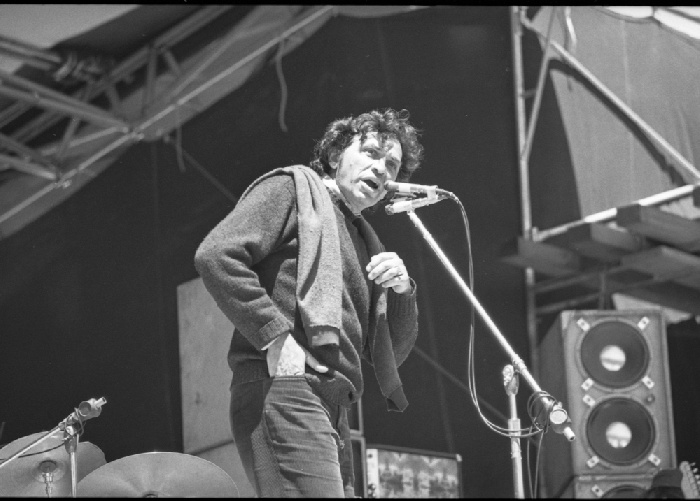
That moment happened just after I Want You where Dylan’s microphone had failed, so the person in the crowd really was unsure who was singing. This malfunctioning mic was a great misfortune as it meant the Kezar crowd, the radio audience and us later listeners were denied a complete rendition of what sounds like an intense, driving take on Dylan’s 1966 pop classic. The singer is a vague presence, faintly amplified by the stage’s other mics and so for the verses, you’re just left to focus on Danko’s pulsing bass line. The latter must have twigged what was happening as he overcompensates by roaring his backing vocal on the song’s chorus.
The issue is finally resolved by the set’s big collaborative climax though it’s Young’s song Helpless that first takes centre stage. After a blaring harmonica introduction backed by Keith’s smooth pedal steel guitar, Young sings “There’s a town in North Ontario” generating a huge roar of approval from the crowd. Though Dylan had once felt that Heart of Gold was a knock-off of his style, that attitude has always felt ironic given that one of his biggest hits of the early 70s – Knockin’ on Heaven’s Door – sounds a lot like Young’s Helpless.
That link between the two tunes is finally acknowledged in glorious fashion at Kezar Stadium during Helpless when the musicians start intoning slow “ooohs”. Hudson’s organ comes in swirling and you sense a shift has happened. Then the now-just-about-audible Dylan sings an altered version of his dyin’ cowboy ballad. But the biggest surprise of this mash-up comes in the chorus when Young and Dylan both yell, “knock-knock-knocking on the dragon’s door”.
It’s an intriguing and seemingly planned lyric change that may suggest the slang term for smoking heroin: chasing the dragon. This could be a reference to how Young’s close friend and Crazy Horse guitarist Danny Whitten had died from an overdose three years ago as lamented on his song, The Needle and the Damage Done. Connecting the lack of power expressed in Young’s Helpless with the imminent approach of death in Dylan’s song – with its pointed lyric change – gives the conjoined performance a weight beyond the superficial similarity of the two tunes.
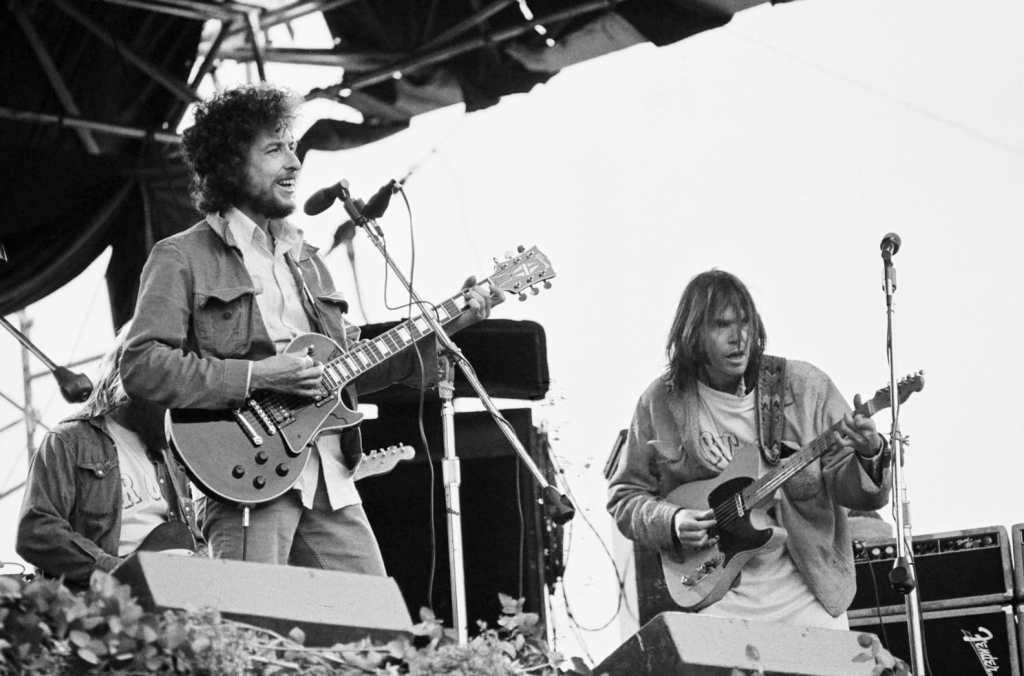
With all the drama and excitement of hearing two huge stars like Bob Dylan and Neil Young blending two of their most famous songs so effectively, it’s easy to forget that they were sharing the stage with a few more big names. While The Band’s mid-70s releases weren’t selling as well as their earlier output, they had been a major part of Dylan’s successful US tour in 1974 and remained a big draw. Though the SNACK line-up was missing two of the group’s members – Robbie Robertson and Richard Manuel – that didn’t stop Helm and Danko from taking the spotlight on three of the set’s eight songs.
Ain’t That a Lot of Love was originally released on Stax Records by its co-writer Homer Banks, though it’s probably more famous as the basis for Gimme Some Lovin’ by The Spencer Davis Group – even if a 2019 lawsuit ruling decided that it wasn’t outright plagiarism. The SNACK Benefit version opts for sludgy guitar riffs over the original’s soulful groove, while Dylan moves to piano to add some basic boogie-woogie licks. Helm sings the main vocal but the song really takes off when he’s joined by Danko’s wail on the chorus. The Band will go on to record Ain’t That a Lot of Love for their final studio album with the original line-up, 1977’s Islands.
The Stevie Wonder and Ivy Hunter penned Lovin’ You is Sweeter Than Ever had long been a live favourite for The Band. They played it at Woodstock in 1969 then two years later during the Rock of Ages residency at New York’s Academy of Music. At Kezar Stadium, Danko takes lead vocals while propelling the song with a strong bass line. Helm and Young join in on backing vocals during the chorus, while it also sounds like Dylan may be roaring to make himself heard over his broken mic.
After the defective version of I Want You, The Band takes centre stage again with a fast-paced rendition of their classic, The Weight. It starts off sounding like the 1966 electric version of One Too Many Mornings, but once Helm sings that opening line about pulling into Nazareth, the crowd roar their approval. Danko does his usual Crazy Chester verse but his voice sounds a little shot by this point – probably from just having howled his way through the chorus of I Want You. With Young joining in on backing vocals during the choruses and the communal celebration of the final verse. this is a wild but fun version of The Weight that the San Francisco audience seem to adore.
The SNACK set concludes with an encore version of the folk traditional, Will the Circle Be Unbroken. Dylan kicks it off with a screeching delivery of the chorus before Danko calms things down on the first verse. Then the whole thing breaks down as no one seems sure of the words or whose turn it is to sing. So someone – presumably Young – plays a neat guitar solo before this messy rendition stumbles to a finish.
Overall, the combined talents of Young, Dylan, The Band and The Stray Gators delivered an eclectic, energetic, obviously under-rehearsed and, at times, chaotic set that proved to be an apt ending to the day’s entertainment. Earlier highlights had come from The Doobie Brothers, in one of their last shows before Michael McDonald join the band, and Joan Baez, who included a couple of Dylan songs – I Shall Be Released and A Hard Rain’s A-Gonna Fall – in her set, as well as The Band’s The Night They Drove Old Dixie Down.
As The Grateful Dead had been on a hiatus of sorts over the previous year, the SNACK Benefit billing was for Jerry Garcia and Friends. In the end it was essentially the core Grateful Dead line-up on stage, though the band mostly performed an instrumental set except for a closing cover of Chuck Berry’s Johnny B. Goode. Having hoped to keep all the performers on a tight schedule, Bill Graham later quipped: “We told the Grateful Dead they had 30 minutes, and they held themselves down to 40.”
The show raised $200,000 for sports and arts programmes in San Francisco, which was ultimately only a tiny percentage of the city’s budget shortfall. However, in the days leading up to the event, the council announced that it had managed to locate $2 million somewhere in the depths of its books. It’s highly likely that while Graham’s fundraising efforts would have only provided short-term support, the publicity surrounding the SNACK Benefit Concert generated enough political pressure for more money to be found.
Just over a decade later, Neil Young and his wife Pegi would start their own events in aid of education, The Bridge School Benefits. For Dylan, the experience of performing with such an assortment of artists in a somewhat spontaneous fashion would have only strengthened his resolve to manifest his idea of a travelling musical carnival. Like at the SNACK Benefit Concert, he would once again be surrounded by stars during the Rolling Thunder Revue later that year. But this time Dylan would not be content with just a supporting role.
What do you think of the SNACK Benefit Concert? Let me know in the Comments below. If you’re enjoying this revisits, you can support my work by buying me a coffee here.
 Home
Home 
Leave a comment